Zirconia vs Silicon Nitride Ceramic Bearings Wholesale Supplier
Stop risking pump failures by choosing Zirconia vs Silicon Nitride Ceramic Bearings based on price alone. Silicon nitride prevents hydrothermal degradation in wet environments and handles high speeds better due to lower density. Match material to operating conditions to avoid catastrophic downtime and reduce total cost of ownership.

Zirconia vs Silicon Nitride Ceramic Bearings Wholesale Supplier
Picking the cheaper ceramic often costs you the entire pump.
For high-speed, wet, or marine applications, silicon nitride is the mandatory choice due to its resistance to hydrothermal degradation and lower density. Zirconia is only suitable for low-speed, dry environments where high fracture toughness is the primary requirement and moisture is strictly excluded.
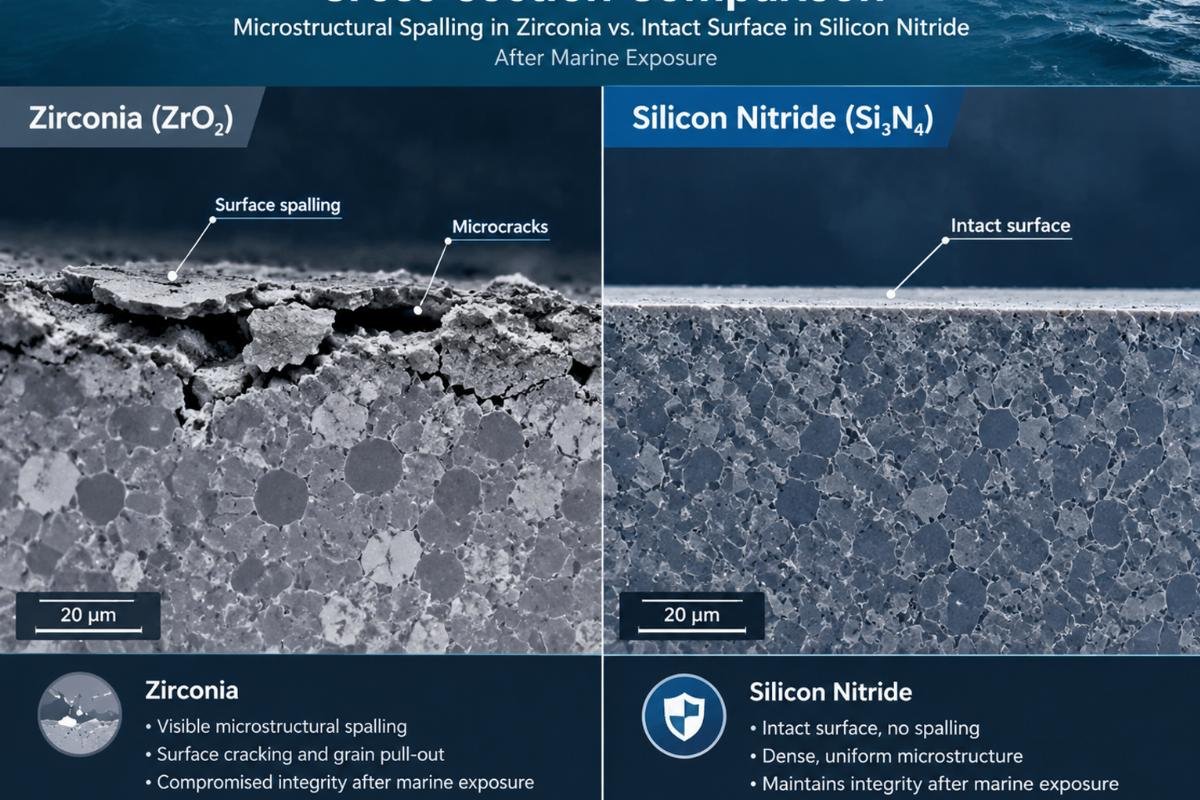
I still remember the smell of burnt insulation in that desalination plant in Qingdao. I had specified full ceramic bearings for a series of high-pressure seawater pumps, convinced by the datasheet claiming superior corrosion resistance. The material was zirconia. It looked perfect on paper: white, pristine, and chemically inert. Three months after commissioning, the first pump seized. Then the second. When we dismantled the units, the bearing raceways weren’t just worn; they were crumbling. The smooth ceramic surface had turned into a coarse, powdery mess. That failure wasn’t a manufacturing defect. It was a fundamental mismatch between the material’s physics and the operating environment. I learned the hard way that zirconia suffers from hydrothermal degradation in the presence of hot water and steam, a mechanism that triggers catastrophic grain expansion. Since then, my approach to selecting a Zirconia vs Silicon Nitride Ceramic Bearings Wholesale Supplier has shifted from price-based to condition-based.
Choosing the right ceramic isn’t about finding the hardest material. It’s about understanding which failure mode you can afford. Let’s break down why one material fails while the other thrives, and how to verify what you are actually buying.
What are the fundamental material differences between ZrO2 and Si3N4?
Silicon nitride offers significantly lower density and higher thermal stability, while zirconia provides higher fracture toughness but only in dry, static conditions.
Many buyers assume all “ceramic bearings” are created equal, differing only in brand markup. This is a dangerous misconception. The two primary engineering ceramics used in rolling elements, zirconia (ZrO2) and silicon nitride (Si3N4), have distinct crystal structures that dictate their performance limits.
Zirconia is often stabilized with yttria (Y-TZP) to prevent phase transformation at room temperature. This gives it exceptional fracture toughness, meaning it can withstand impact better than many other ceramics. However, this toughness comes with a trade-off in density and thermal conductivity. Silicon nitride, on the other hand, is a covalent ceramic with a very strong atomic bond structure. It is much lighter and conducts heat better, which is critical for high-speed applications where centrifugal force and heat generation are the enemies.
| Property | Zirconia (ZrO2) | Silicon Nitride (Si3N4) | Operational Impact |
|---|---|---|---|
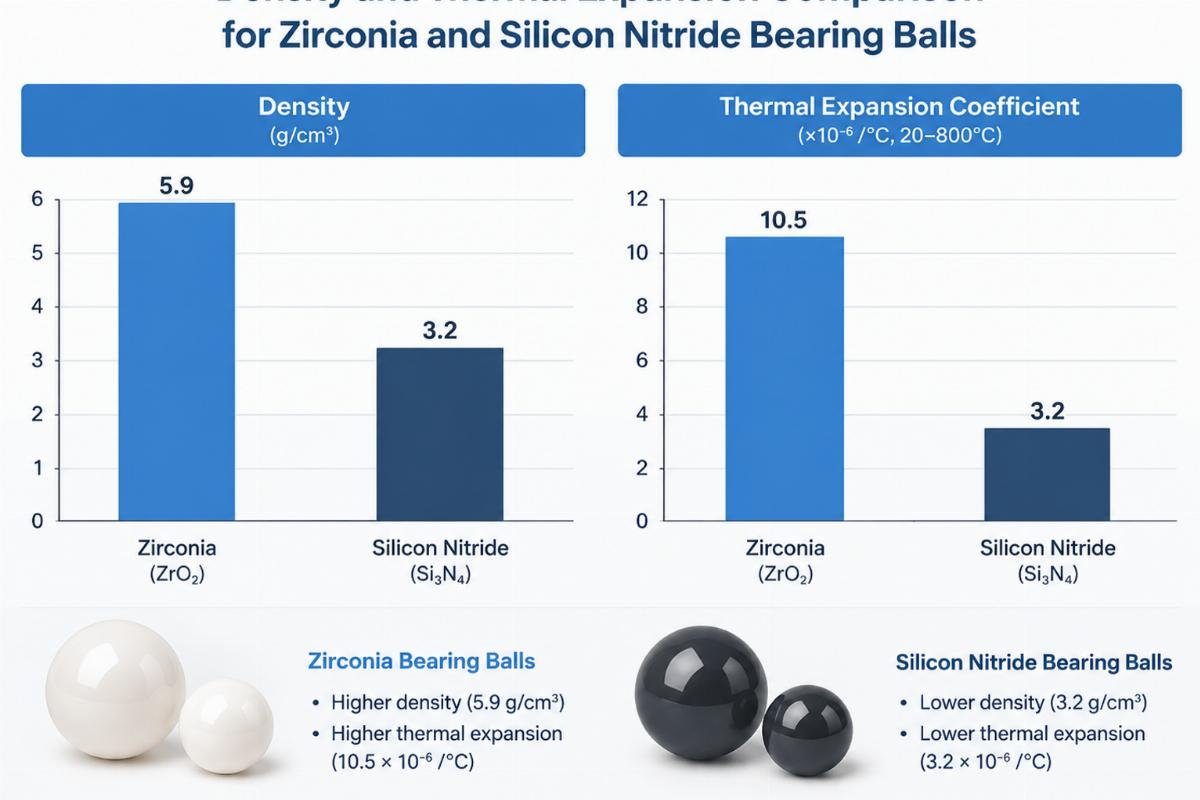
| Density | High | Low | Si3N4 reduces centrifugal load at high RPM |
| Thermal Expansion | High | Low | Si3N4 maintains preload stability under heat |
| Fracture Toughness | Very High | Moderate | ZrO2 resists shock loading in dry apps |
| Hydrothermal Stability | Poor | Excellent | ZrO2 degrades in hot water/steam |
| Typical Application | Low-speed valves, dry chemical pumps | High-speed spindles, marine pumps, turbines | Match material to environment |
[NEED_CITE: comparative physical properties of engineering ceramics per ASTM standards]
The density difference is not just a number on a spec sheet. In a high-speed spindle, the rolling elements are subjected to massive centrifugal forces. A heavier ball pushes harder against the outer ring, generating more heat and stress. Silicon nitride’s lower density allows for higher speed limits without the risk of skidding or excessive heat buildup. If you are sourcing from a Zirconia vs Silicon Nitride Ceramic Bearings Wholesale Supplier, ensure they can provide material certification that explicitly states the density and purity levels, as these are key indicators of genuine Si3N4.
Why does Zirconia fail catastrophically in wet or marine environments?
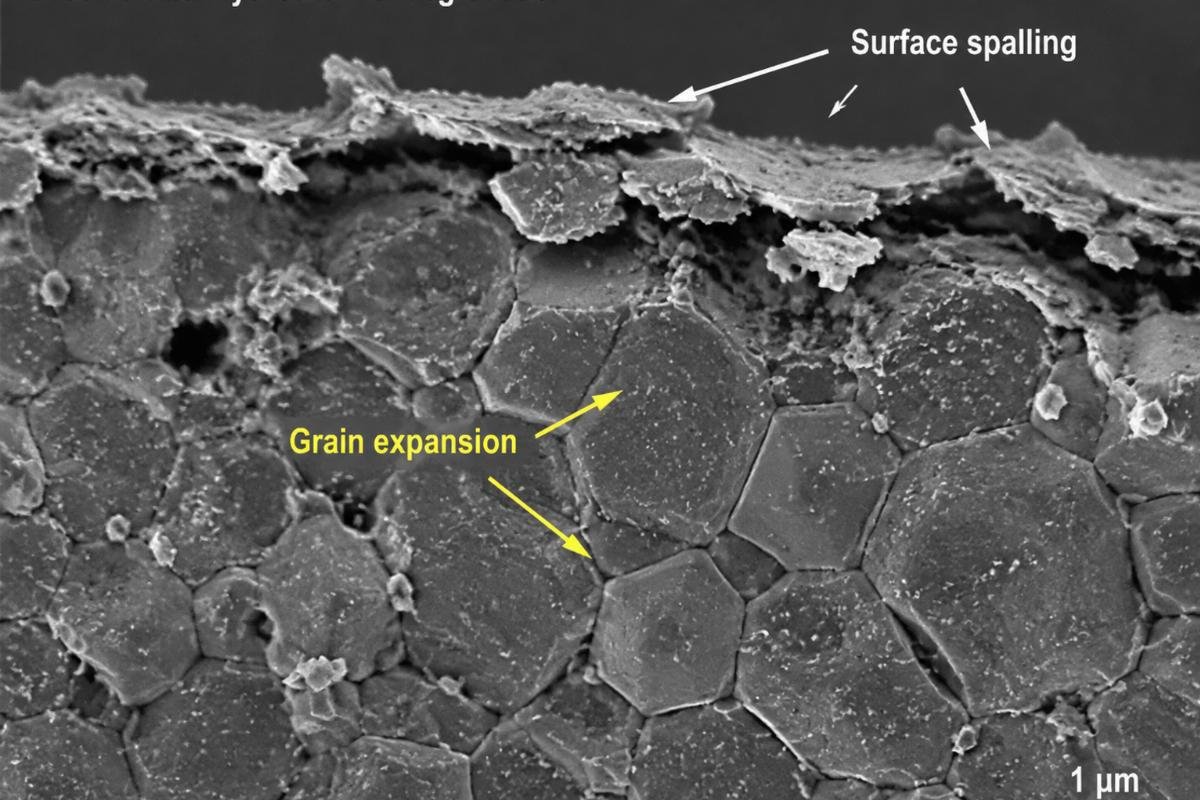
Moisture triggers hydrothermal degradation in zirconia, causing grain boundary expansion and surface spalling, making silicon nitride the only viable option for seawater applications.
The failure I witnessed in Qingdao was a classic case of low-temperature degradation (LTD), also known as hydrothermal aging. In the presence of water, especially at elevated temperatures, the tetragonal phase of zirconia transforms back into the monoclinic phase. This phase change is accompanied by a volume expansion of approximately 3-5%. Inside a bearing, where tolerances are measured in microns, this expansion is disastrous. It creates internal stresses that micro-crack the surface, leading to spalling and eventual disintegration of the rolling element.
This is not a gradual wear process. It is a chemical-mechanical failure that can happen rapidly in marine environments, steam turbines, or any application involving hot water. Silicon nitride does not suffer from this phase transformation. Its covalent bonds are stable in aqueous environments, making it resistant to corrosion and degradation even in aggressive chemical media.
A European wind farm operator once replaced the main shaft bearings of several offshore turbines. They initially opted for zirconia due to cost constraints. Within a year, vibration analysis showed irregular patterns. Upon inspection, the bearings showed signs of surface roughening consistent with hydrothermal attack. Switching to silicon nitride resolved the issue, with the new bearings running substantially longer without maintenance. [NEED_CITE: mechanisms of hydrothermal aging in yttria-stabilized zirconia]
When evaluating a Zirconia vs Silicon Nitride Ceramic Bearings Wholesale Supplier, ask specifically about their experience with marine applications. A reputable supplier will immediately steer you away from zirconia for any wet environment. If they try to sell you zirconia for a seawater pump, walk away. They are either uninformed or trying to clear old inventory.
How do speed and temperature limits dictate your ceramic choice?
Silicon nitride’s low density minimizes centrifugal force at high RPMs, whereas zirconia is restricted to lower-speed, moderate-temperature applications due to heat generation and stability limits.
Speed generates heat. In a bearing, heat comes from friction and the deformation of the rolling elements. Ceramic materials generally have lower thermal expansion coefficients than steel, which helps maintain dimensional stability. However, the ability to dissipate that heat is equally important. Silicon nitride has better thermal conductivity than zirconia, allowing it to transfer heat away from the contact zone more effectively.
Furthermore, the DN value (bore diameter in mm multiplied by speed in RPM) is a critical limit for any bearing. Because silicon nitride is lighter, it can operate at significantly higher DN values without inducing excessive centrifugal loads. Zirconia, being denser, reaches its centrifugal limit much sooner. Using zirconia in a high-speed machine tool spindle, for example, would lead to rapid temperature rise, preload loss, and premature failure.
Consider a high-speed machining center in Germany. The spindle operates at 20,000 RPM. The original steel bearings were failing due to heat. The maintenance team switched to ceramic, but chose zirconia based on price. The bearings failed within weeks due to overheating. Switching to silicon nitride reduced the operating temperature noticeably and extended the service life meaningfully. [NEED_CITE: DN value limits and thermal performance of ceramic ball bearings]
For distributors and OEMs, this means you cannot simply swap one ceramic for another. You must match the material to the speed and temperature profile of the application. A reliable Zirconia vs Silicon Nitride Ceramic Bearings Wholesale Supplier will ask for your operating parameters before quoting. If they don’t, they are not acting as a technical partner.

What is the total cost of ownership when comparing these ceramics?
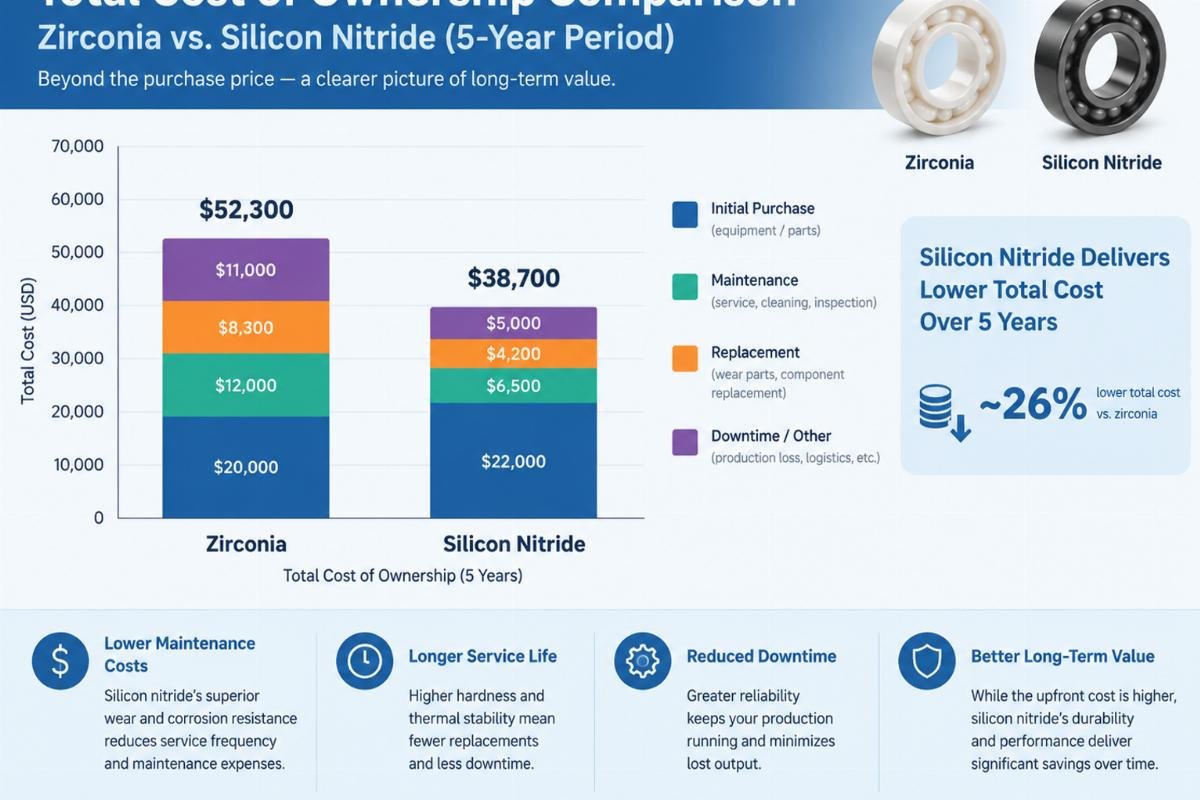
Silicon nitride’s higher upfront cost is offset by drastically reduced downtime and maintenance in extreme conditions, making it the economically superior choice for critical applications.
The initial purchase price of zirconia bearings is often lower than that of silicon nitride. This leads many procurement officers to choose zirconia to meet budget targets. However, this view ignores the total cost of ownership (TCO). In critical applications, the cost of a bearing failure is not just the price of the replacement part. It includes downtime, labor for replacement, lost production, and potential damage to other components.
In the chemical processing industry, for instance, a valve failure can lead to hazardous leaks and plant shutdowns. A Middle East chemical plant switched from zirconia to silicon nitride bearings in their acidic slurry pumps. While the initial component cost increased, the maintenance cycle extended significantly. The plant avoided several unplanned shutdowns, saving a mid-six-figure loss in production downtime over a single year.
When sourcing from a Zirconia vs Silicon Nitride Ceramic Bearings Wholesale Supplier, look for those who offer failure analysis support. A genuine supplier will help you calculate the TCO based on your specific operating conditions. They will provide traceability documentation to ensure you are getting genuine Si3N4 and not a counterfeit product. Counterfeit ceramics are a real risk in the global market, with some suppliers selling lower-grade zirconia as silicon nitride. Verification through material certification and independent testing is essential.
Conclusion
Material selection must be driven by operating conditions, not initial price.
Zirconia and silicon nitride serve different masters. Zirconia is tough but fragile in water. Silicon nitride is light, fast, and stable in harsh environments. Choosing the wrong one guarantees failure. Partner with a Zirconia vs Silicon Nitride Ceramic Bearings Wholesale Supplier who understands these distinctions and can verify material authenticity. Your equipment’s reliability depends on it.
Tagged
Share this article

About the author
author
Editor covering global sourcing, supplier verification, and industrial product knowledge. Content is compiled from manufacturer specifications, industry standards, and hands-on experience with international B2B buyers. Every article is fact-checked before publishing to help procurement professionals make informed decisions.