Telescope Mount Bearings Wholesale Supplier Bulk OEM
Telescope mount bearings require ultra-high precision and robust anti-corrosion packaging to ensure frictionless tracking in harsh observatory environments. Select between cross-roller and deep-groove designs while prioritizing VCI packaging to prevent transit rust, guaranteeing your bulk OEM components arrive ready for immediate installation.

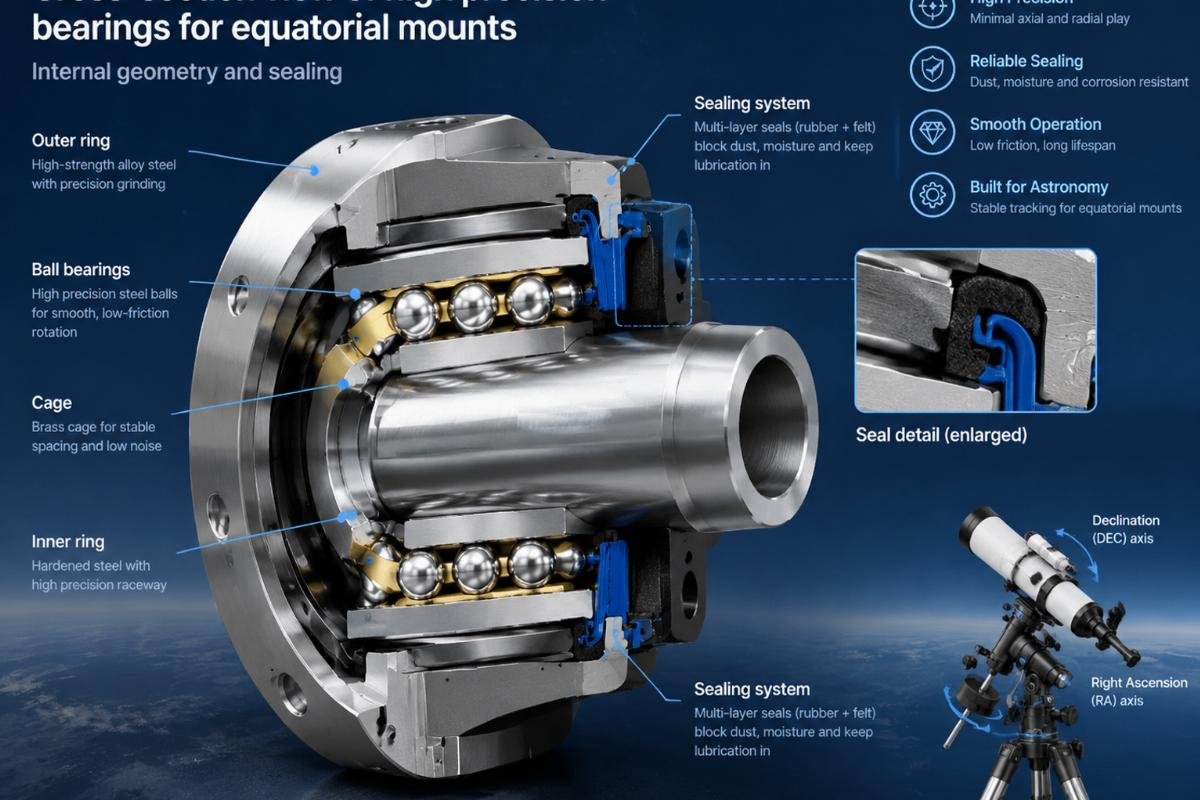
Telescope Mount Bearings Wholesale Supplier Bulk OEM
Extreme precision without proper sealing causes premature failure in dusty environments.
Telescope mount bearings demand ultra-high precision for frictionless tracking and robust anti-corrosion packaging to survive harsh coastal observatories and long-distance transit. Selecting the right component involves balancing micron-level runout tolerances with environmental resilience, ensuring that the mechanical interface does not introduce vibration or stiction into the optical path. For equatorial mounts, this means prioritizing cross-roller designs for heavy radio telescopes and deep-groove balls for portable optical setups, all while verifying that the supply chain preserves these tight tolerances through rigorous VCI packaging and pre-shipment inspections.
The journey from a machining floor to global distribution reveals that bulk OEM is not just about achieving tight tolerances; it is about ensuring those tolerances survive the journey. Years ago, a shipment of custom cross-roller bearings destined for a mining observatory in Antofagasta, Chile, arrived at Valparaíso port with rusted cages. The focus had been entirely on machining precision, ignoring the marine transit risks posed by high salinity and temperature shifts. That loss highlighted a critical gap in the industry: the disconnect between manufacturing quality and logistical preservation. Today, whether sourcing deep-groove balls or heavy-duty tapered rollers, the priority must shift to comprehensive protection strategies that guarantee perfect condition upon arrival across Latin America and other demanding regions.
Why Standard Bearings Fail in Telescope Mounts?
Tracking demands micron-level smoothness that standard industrial bearings lack.
Standard industrial bearings are designed for rotational speed and load capacity, often overlooking the unique requirements of astronomical tracking. Telescope mounts operate at extremely low speeds, sometimes completing a single rotation over twenty-four hours. In this regime, static friction and stiction become the primary enemies of accuracy. A bearing that performs flawlessly in a high-speed motor may exhibit stick-slip behavior when rotated slowly, causing the telescope to jump rather than glide. This phenomenon introduces jitter into the image, rendering long-exposure astrophotography impossible. [NEED_CITE: friction torque measurement standards for slow-speed tracking applications]
The issue is compounded by environmental factors. Observatories are often located in remote, high-altitude, or coastal areas to minimize light pollution and atmospheric interference. These locations expose equipment to extreme temperature fluctuations, dust, and salt mist. Standard seals may harden in cold temperatures or degrade under UV exposure, allowing contaminants to enter the raceway. Once abrasive particles mix with lubricant, they create a grinding paste that accelerates wear and increases torque variability. This is why generic replacements often fail within months, whereas specialized telescope mount bearings are engineered with low-torque seals and stable lubricants that maintain consistency across wide temperature ranges.
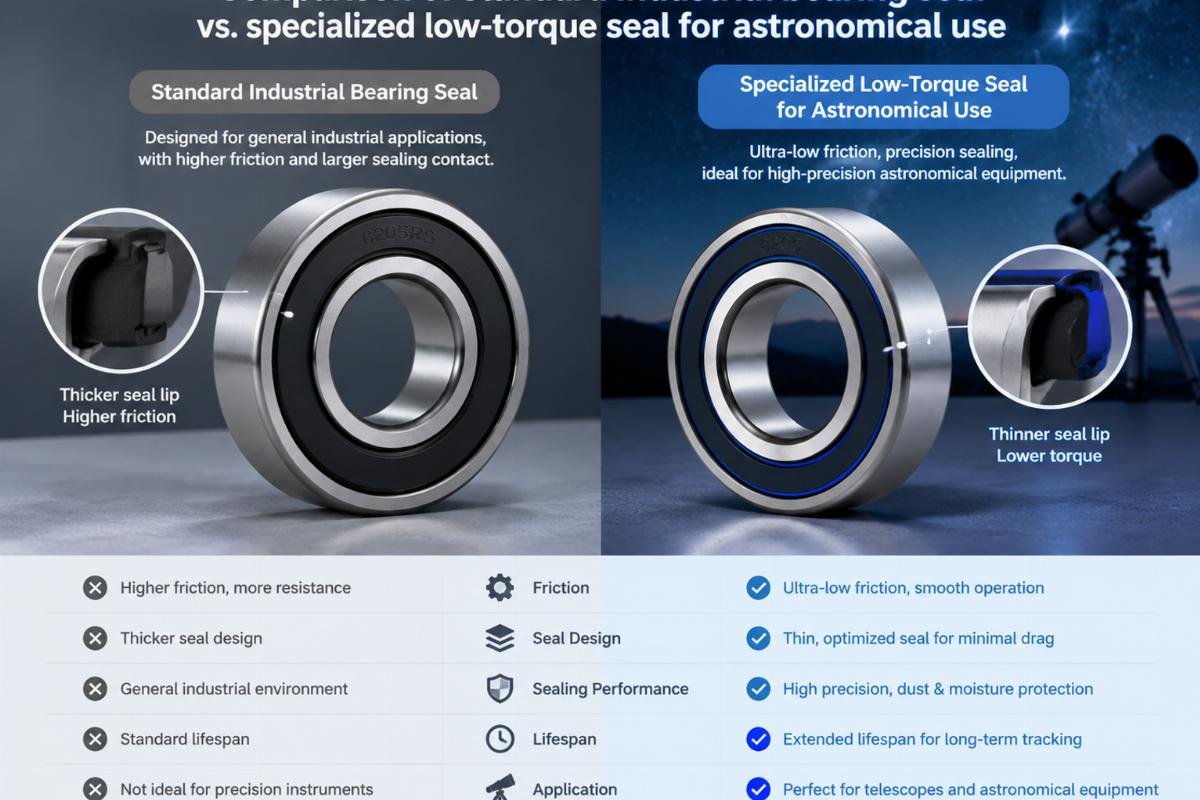
Furthermore, the structural design of telescope mounts places unique stress on bearings. Equatorial mounts often operate in a cantilever configuration, where the weight of the telescope and counterweights creates significant moment loads. Standard radial bearings are not optimized for these combined axial and radial loads, leading to premature fatigue and increased play. Specialized bearings for these applications must handle high static loads while maintaining minimal runout, ensuring that the optical axis remains stable throughout the tracking arc.
Selecting the Right Bearing Type for Your Mount
Cross-rollers for heavy radio telescopes versus deep-groove balls for portable optical mounts.
Choosing the correct bearing type is critical for balancing performance, weight, and cost. The two most common configurations for telescope mounts are cross-roller bearings and deep-groove ball bearings, each serving distinct applications based on load requirements and precision needs.
| Feature | Cross-Roller Bearings | Deep-Groove Ball Bearings |
|---|---|---|
| Load Capacity | High radial and axial load capacity in a compact design | Moderate radial load, limited axial load capacity |
| Precision | Ultra-high precision with minimal runout | Good precision, suitable for general purpose |
| Stiffness | High rigidity, resistant to moment loads | Lower rigidity, prone to deflection under cantilever loads |
| Application | Large-aperture radio telescopes, heavy equatorial mounts | Portable equatorial mounts, consumer-grade optics |
| Torque | Low starting torque, consistent rotation | Very low torque, ideal for slow-speed tracking |
| Cost | Higher due to complex manufacturing and assembly | Lower, widely available and cost-effective |
Cross-roller bearings are the preferred choice for large-aperture radio telescopes and heavy-duty equatorial mounts. Their design allows them to support high radial, axial, and moment loads simultaneously, making them ideal for cantilevered structures where stability is paramount. The cylindrical rollers are arranged at 90-degree angles, providing line contact that distributes load evenly and minimizes deformation. This results in exceptional rigidity and precision, with runout measured in microns, ensuring that the telescope maintains its alignment even under heavy wind loads. [NEED_CITE: static load rating calculations for cantilever mount structures]
In contrast, deep-groove ball bearings are widely used in portable equatorial mounts and consumer-grade optical systems. Their point contact design offers very low friction torque, which is essential for smooth, slow-speed tracking without the need for powerful motors. While they have lower load capacity and rigidity compared to cross-rollers, their lightweight nature and cost-effectiveness make them suitable for applications where portability and ease of use are prioritized. For OEMs producing consumer mounts, focusing on low-torque deep-groove balls can significantly enhance user experience by reducing the effort required for manual adjustments and improving automated tracking accuracy.

When sourcing these components, it is essential to verify the specific grade and tolerance class. For high-end astronomical applications, bearings reaching P5 precision or higher are often required to minimize wobble and ensure accurate pointing. However, extreme precision without proper sealing can lead to premature failure in dusty environments, so the selection process must always consider the operational environment alongside mechanical specifications.
Surviving the Supply Chain: Packaging & Transit
VCI packaging and pre-shipment inspections are as critical as machining tolerances for overseas delivery.
The integrity of high-precision bearings is vulnerable not just during operation, but also during transit. Buyers often obsess over unit price, ignoring that poor transit packaging causes more rust rejections than machining defects. For telescope mount bearings, which are often shipped to remote observatories or coastal ports, the risk of corrosion is significant. Salt mist, humidity, and temperature fluctuations during sea freight can compromise unprotected steel surfaces, leading to surface rust that affects performance and aesthetics.
To mitigate these risks, Volatile Corrosion Inhibitor (VCI) packaging is essential. VCI emitters release protective molecules that form a thin layer on metal surfaces, preventing oxidation even in high-humidity environments. This is particularly important for shipments traveling through tropical regions or across oceans, where condensation inside containers is common. Additionally, desiccants should be included to control moisture levels within the packaging. The combination of VCI paper, plastic wrapping, and desiccants creates a micro-environment that preserves the bearing’s finish until it is ready for installation.
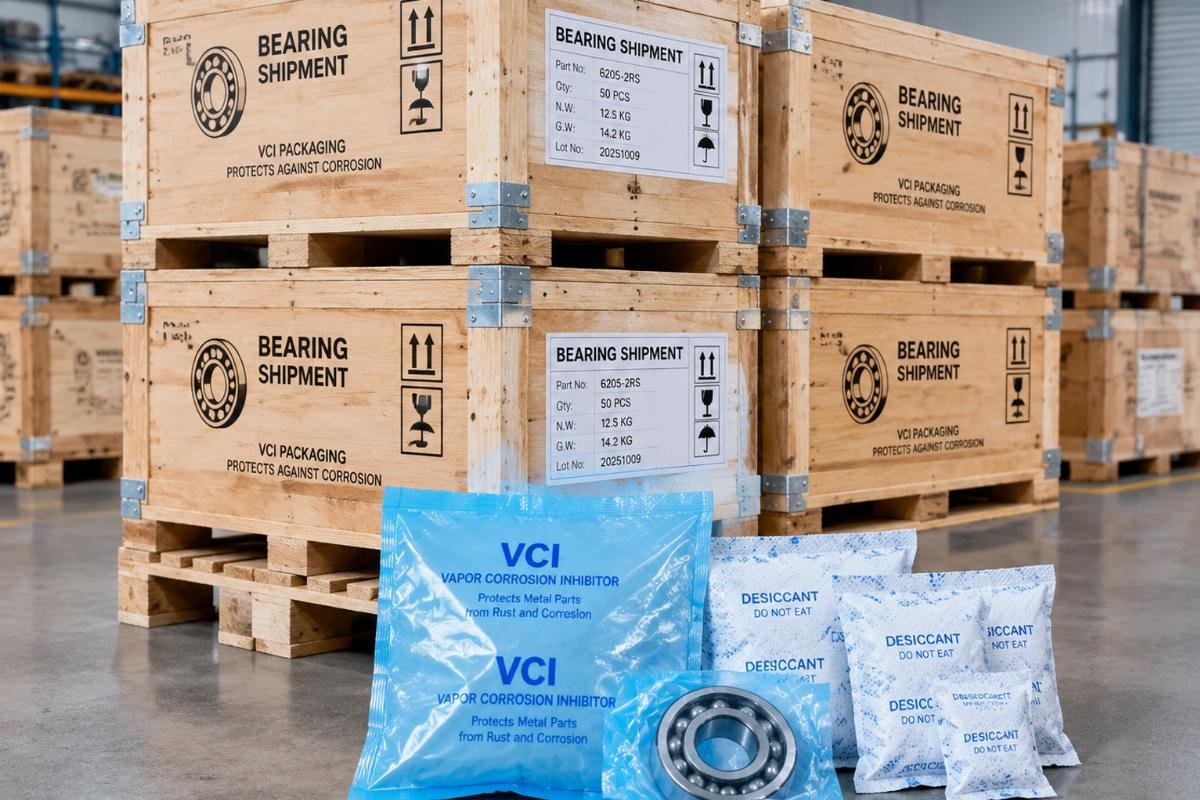
Pre-shipment inspections are another critical step in ensuring quality. Before goods leave the factory, a rigorous inspection should verify that the packaging is intact, the labels are correct, and the bearings show no signs of surface damage or corrosion. This is especially important for mixed-brand packages, where different components may have varying sensitivity to environmental conditions. By conducting these inspections, suppliers can identify and rectify issues before they reach the customer, reducing the likelihood of returns and delays. [NEED_CITE: environmental testing protocols for bearing storage and transit]
For OEMs and distributors, partnering with a supplier who prioritizes these logistical details can save significant time and money. A supplier who understands the nuances of international shipping, from container consolidation to customs documentation, ensures that the bearings arrive in perfect condition, ready for immediate installation. This level of service transforms the supply chain from a potential liability into a competitive advantage, allowing businesses to focus on their core competencies rather than troubleshooting damaged goods.
How to Verify Quality Before Bulk Ordering
Requesting traceability docs and conducting strict pre-shipment inspections for mixed-brand packages.
Verifying the quality of telescope mount bearings before placing a bulk order requires a systematic approach that goes beyond simple sample testing. Genuine original bearings with complete traceability documentation are non-negotiable for high-precision applications. This includes material certificates, heat treatment records, and dimensional inspection reports that confirm the bearings meet the specified standards. Without these documents, it is impossible to verify the authenticity and quality of the components, leaving buyers vulnerable to counterfeit or substandard products.
For mixed-brand orders, which are common among distributors and OEMs seeking cost-effective solutions, verification becomes more complex. Each brand may have different packaging standards and documentation formats, requiring a thorough review of each item in the shipment. A reliable supplier will provide a consolidated packing list with detailed traceability information for each brand and model, ensuring that every component can be traced back to its origin. This transparency builds trust and allows buyers to perform their own quality checks with confidence.
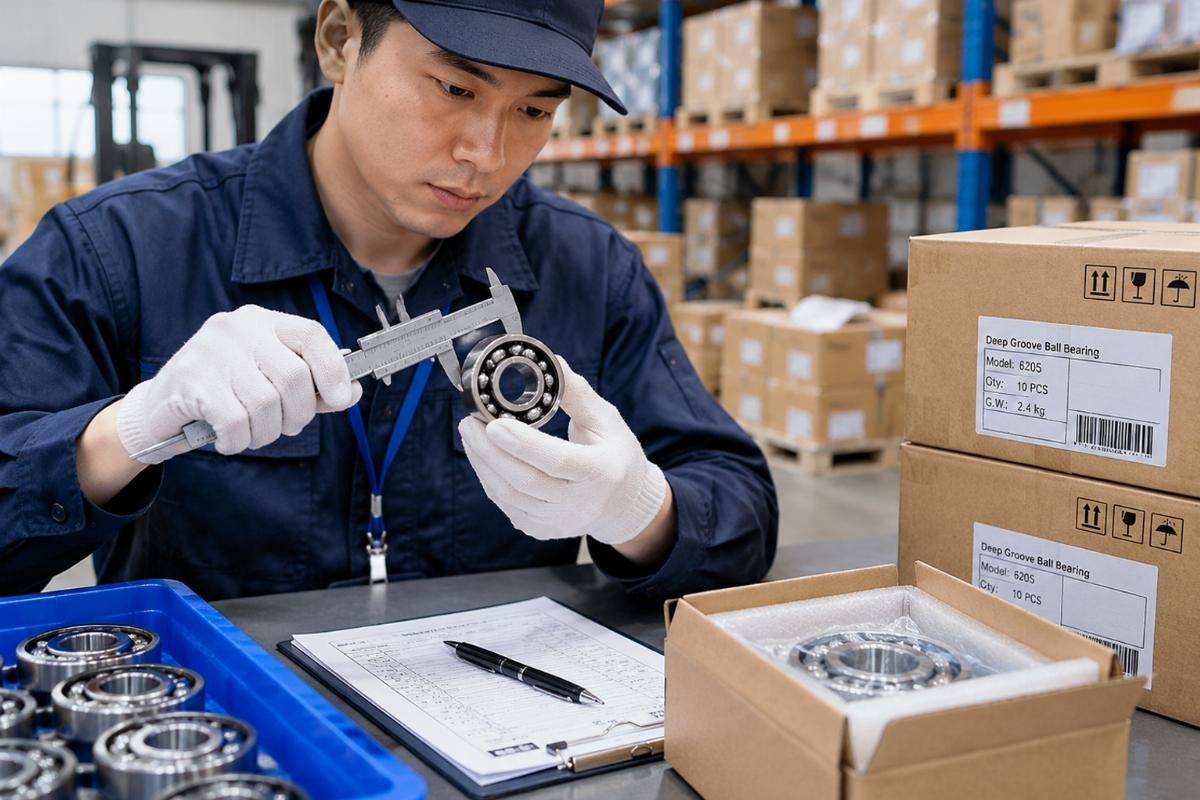
Conducting strict pre-shipment inspections is the final safeguard against quality issues. This involves visually inspecting a representative sample of the bearings for surface defects, verifying dimensions against technical drawings, and checking the integrity of the packaging. For high-precision bearings, additional tests such as runout verification and friction torque measurement may be performed to ensure they meet the required performance standards. [NEED_CITE: runout tolerance verification methods for precision bearings]
By implementing these verification steps, buyers can minimize the risk of receiving defective or non-conforming goods. This proactive approach not only protects the investment but also ensures that the telescope mounts perform reliably in the field, maintaining the reputation of the manufacturer or distributor. In an industry where precision and reliability are paramount, thorough quality verification is not just a best practice; it is a necessity.
Conclusion
Precision is meaningless if the bearing arrives corroded or damaged.
Selecting the right telescope mount bearings involves balancing mechanical precision with environmental resilience and logistical security. By understanding the specific requirements of equatorial mounts, choosing the appropriate bearing type, and ensuring robust protection during transit, buyers can secure components that deliver consistent performance in demanding astronomical applications. Trustworthy sourcing partners prioritize traceability and rigorous inspection, ensuring that every bearing meets the highest standards of quality and reliability.
Tagged
Share this article

About the author
author
Editor covering global sourcing, supplier verification, and industrial product knowledge. Content is compiled from manufacturer specifications, industry standards, and hands-on experience with international B2B buyers. Every article is fact-checked before publishing to help procurement professionals make informed decisions.


