Super Precision Bearings: Buying Guide for Spindle Builders
Selecting Super Precision Bearings requires matching preload classes to spindle speeds, not just choosing premium brands. Learn how excessive preload causes thermal seizure and discover strategies for verifying authenticity. Optimize your sourcing with a diversified supply chain that balances performance, cost, and reliability for high-speed applications.


Super Precision Bearings: Buying Guide for Spindle Builders
Higher preload does not mean better rigidity at high speeds; it often means thermal seizure.
Selecting super precision bearings requires matching preload classes and paired clearance to specific spindle speeds, not just choosing premium brands. The core of spindle reliability lies in the precise coordination between angular contact ball bearings for machine tools and the operational thermal dynamics of the assembly.
I still remember the smell of burnt oil in a workshop in Qingdao. I was overseeing the installation of a new high-speed milling spindle. We had sourced what we thought were top-tier components, focusing entirely on the brand reputation and unit price. What we ignored was the pairing documentation. The bearings arrived in individual boxes, not as matched sets. When the spindle hit its target RPM, the internal clearance vanished due to heat expansion. The result was not just a loss of precision; it was a complete lock-up. That batch was returned, and the lesson was expensive. Since then, I have learned that for spindle builders, the specification sheet is more critical than the logo on the box. [NEED_CITE: common causes of spindle bearing failure related to preload mismatch]
This guide breaks down the technical realities of selecting these critical components. We will move beyond marketing claims to focus on the engineering parameters that actually keep your spindles running cool and true.
What Defines a Super Precision Bearing for Spindles?
Super precision is not just about tight tolerances; it is about consistency and material purity.
When we talk about super precision bearings, we are generally referring to ABEC P4 or P2 grades, or their ISO equivalents. However, a single bearing meeting P4 tolerance is insufficient for a high-performance spindle. The defining characteristic is the paired matching process. Manufacturers grind these angular contact ball bearings for machine tools to ensure that when two or more are mounted together, their height and diameter variations are within micron-level limits.
Material purity is another non-negotiable factor. Standard bearing steel contains inclusions that can act as stress concentrators under the high cyclic loads of a machining center. Premium super precision bearings use vacuum-degassed steel with controlled oxygen content. This reduces the risk of subsurface fatigue cracks, which are catastrophic in high-speed applications. [NEED_CITE: impact of steel purity on bearing fatigue life in high-speed applications]
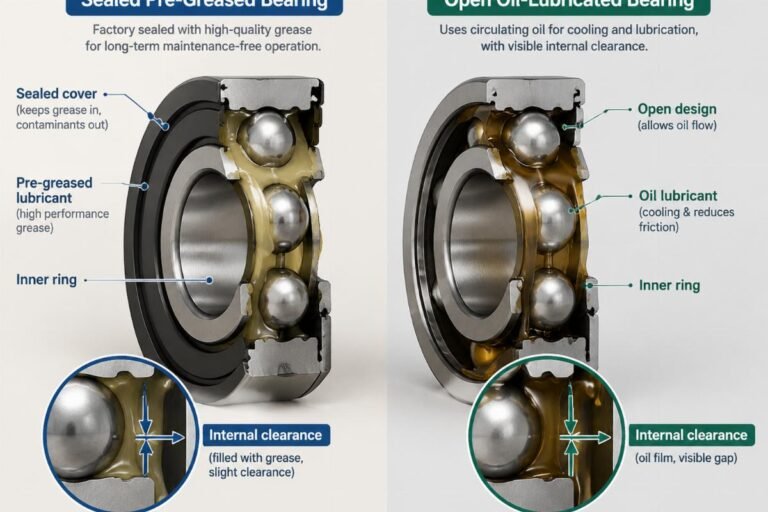
Another key differentiator is the cage design. In high-speed spindles, the centrifugal force on the rolling elements is immense. Phenolic resin cages are often preferred over steel because they are lighter and can retain small amounts of lubricant, reducing friction heat. However, the choice depends on the lubrication method. Oil-air mist systems work well with phenolic cages, while grease-packed spindles might require different considerations to prevent cage degradation over time.
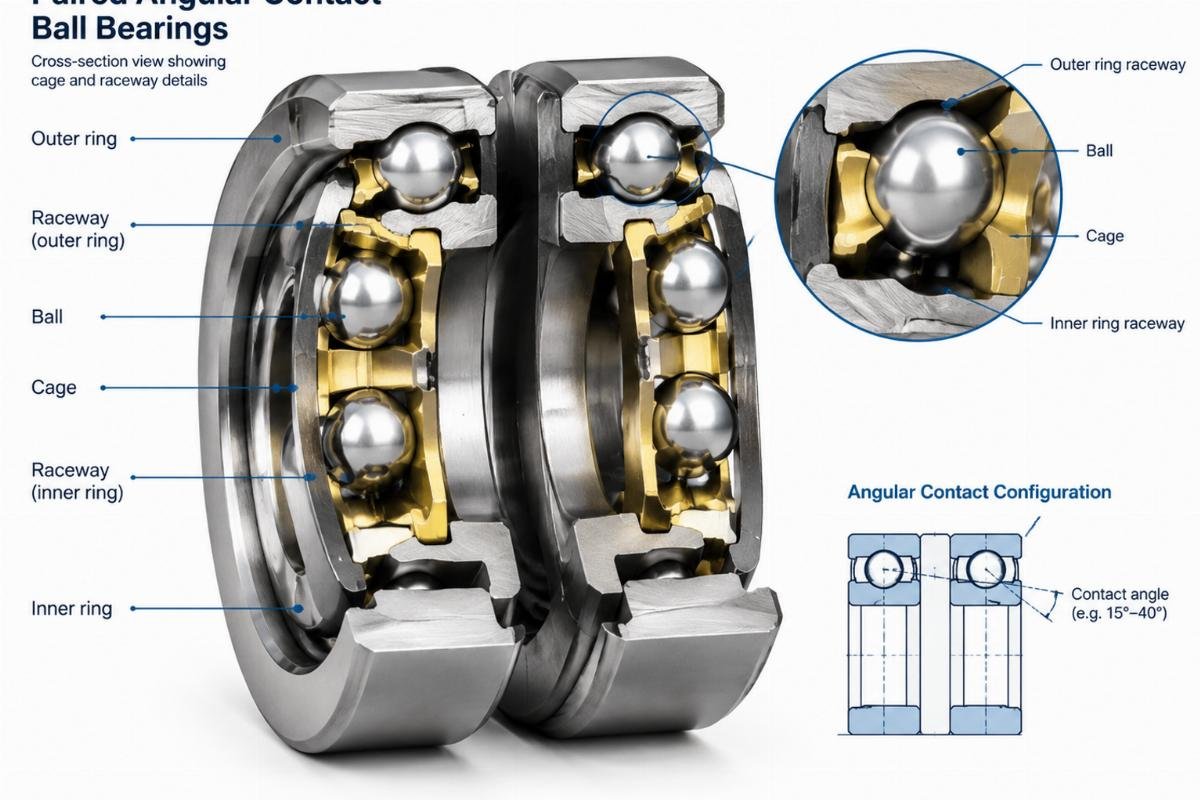
For spindle builders, verifying these attributes requires more than a certificate. It demands a review of the traceability documents that link the specific batch to its material test reports. Without this chain of custody, you are guessing at the internal quality of the component.
How to Match Preload and Clearance to Spindle Speed?
Excessive preload at high RPMs creates fatal thermal expansion, destroying accuracy.
The most common mistake in spindle design is assuming that maximum rigidity equals maximum performance. Rigidity is important for cutting forces, but it comes at the cost of heat generation. Preload is the axial load applied to the bearing set to eliminate internal clearance. The relationship between preload and speed is inverse. As speed increases, the allowable preload must decrease to manage heat.
We categorize preload into light, medium, and heavy classes. For a high-speed milling spindle operating above 10,000 RPM, a light preload is typically required. This allows for some thermal expansion without generating excessive friction. Conversely, a grinding spindle, which operates at lower speeds but requires extreme stiffness for surface finish, might benefit from a medium or even heavy preload. [NEED_CITE: guidelines for preload selection based on spindle speed and application type]
| Application Type | Typical Speed Range | Recommended Preload Class | Primary Concern |
|---|---|---|---|
| High-Speed Milling | Very High | Light | Thermal Stability |
| Precision Grinding | Low to Medium | Medium to Heavy | Stiffness & Vibration |
| General Turning | Medium | Medium | Balance of Stiffness/Heat |
Selecting the wrong class leads to two distinct failure modes. Too little preload results in chatter and poor surface finish due to micro-movement between the races. Too much preload causes the temperature to rise rapidly. As the inner ring heats up, it expands more than the outer ring, increasing the preload further. This positive feedback loop leads to thermal seizure.
I once consulted for a retrofit project where the client insisted on heavy preload for a motorized spindle. They wanted maximum rigidity for heavy cuts. The spindle ran fine at low speeds but failed within hours when pushed to its rated maximum. The issue was not the bearing quality, but the mismatch between the preload class and the thermal dissipation capability of the housing. Adjusting to a lighter preload class solved the issue, allowing the spindle to reach its full speed potential without overheating.

Understanding this balance is crucial. It is not about picking the strongest bearing, but the right configuration for the thermal environment of your specific machine tool.
Which Brands and Configurations Fit Your Budget and Specs?
Reliable performance does not always require a single-brand monopoly; mixed sourcing can mitigate risk.
The market for super precision bearings is dominated by a few global giants. Brands like SKF, FAG, NSK, and NTN set the standard for quality and consistency. These manufacturers offer extensive technical support and proven track records in demanding applications. For critical aerospace or medical device spindles, these premium brands are often the default choice due to their rigorous quality control and global service networks.
However, relying on a single brand creates supply chain vulnerability. Lead times can fluctuate, and price premiums can erode margins. This is where a strategic approach to sourcing becomes valuable. Reliable domestic Chinese bearing lines, such as ZWZ, HRB, and LYC, have made significant strides in precision manufacturing. While they may not yet match the absolute peak performance of the top tier in every ultra-high-speed niche, they offer excellent value for general industrial machine tools and mid-range applications. [NEED_CITE: comparison of precision bearing manufacturing capabilities across global and emerging markets]
A smart strategy for spindle builders is to qualify multiple sources. Use premium brands for your flagship, high-speed models where performance margins are thin. For standard duty spindles or cost-sensitive projects, integrate high-quality alternatives. This diversification protects your production schedule from disruptions.
When evaluating configurations, look beyond the brand name. Consider the availability of specific paired sets. Some suppliers stock standard pairs, while others offer custom matching services. The ability to source mixed-brand packages from a single distributor can simplify logistics. Instead of managing five different accounts, you can consolidate orders. This approach also allows for better negotiation leverage and simplified quality assurance processes, as you deal with one point of contact for traceability documentation.
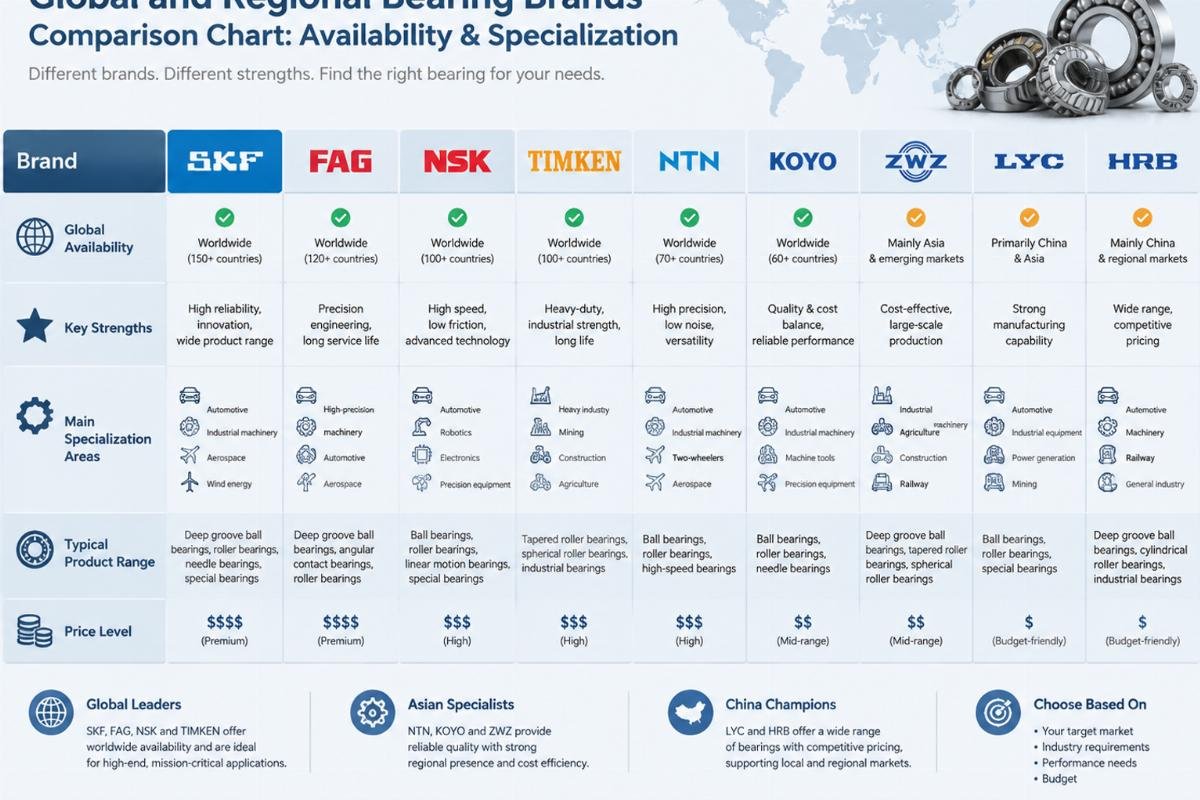
The goal is to build a supply chain that is both robust and flexible. By understanding the strengths of different manufacturers, you can optimize costs without compromising the precision required for your end customers.
How to Verify Authenticity and Quality Upon Delivery?
Trust but verify; visual inspection and documentation checks are your first line of defense.
Receiving a shipment of super precision bearings is not the end of the procurement process; it is the start of quality assurance. Counterfeit or substandard products can slip into the supply chain, especially when sourcing through multiple intermediaries. A genuine bearing is defined by its traceability. Every reputable manufacturer provides a certificate of conformity that links the part number to the production batch and material heat number.
Start with the packaging. Premium super precision bearings are individually wrapped in anti-corrosion paper and sealed in rigid boxes. Look for holographic labels or QR codes that can be verified on the manufacturer’s website. If the packaging looks tampered with or lacks specific branding elements, proceed with caution.
Visual inspection is the next step. Check the raceways for any signs of handling damage or corrosion. The surface should be mirror-smooth. Any discoloration or roughness is a red flag. While you cannot measure P4 tolerance with standard shop tools, you can perform basic dimensional spot-checks. Measure the outer diameter and width at several points. Significant variations indicate poor quality control.
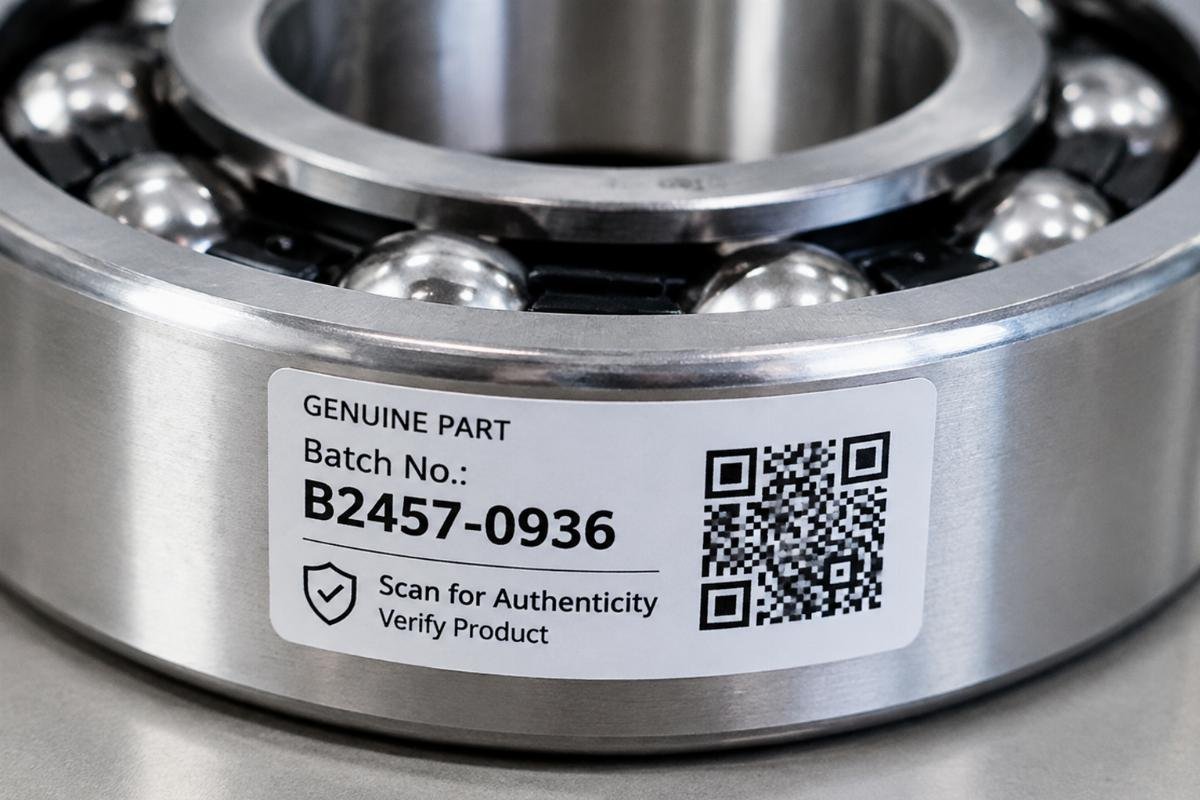
For critical applications, consider sending samples to an independent lab for material analysis. This verifies the steel composition and hardness. While this adds cost, it is a small price compared to the reputational damage of a field failure. Establishing a routine incoming inspection protocol ensures that only verified components enter your assembly line. This diligence protects your brand and ensures that the super precision bearings you install perform as expected.
Conclusion
Precision is a system property, not just a component attribute.
Selecting the right super precision bearings involves balancing preload, speed, and material quality. It requires looking beyond the brand name to understand the technical specifications that drive performance. By matching preload classes to operational speeds and verifying authenticity through rigorous inspection, spindle builders can avoid costly failures. A diversified sourcing strategy further enhances resilience, ensuring consistent supply without sacrificing quality. Focus on the engineering details, and the reliability will follow.
Tagged
Share this article

About the author
author
Editor covering global sourcing, supplier verification, and industrial product knowledge. Content is compiled from manufacturer specifications, industry standards, and hands-on experience with international B2B buyers. Every article is fact-checked before publishing to help procurement professionals make informed decisions.