ISO 13485 Medical Bearing Supplier: Genuine SKF, FAG, NSK Wholesale
Sourcing from ISO 13485 medical bearing suppliers demands more than generic certificates to ensure regulatory compliance. Verify genuine SKF and FAG bearings by demanding full chain traceability and batch specific material certifications. Avoid costly audit failures and liability traps by prioritizing documented origin proofs over lowest price offers.

ISO 13485 Medical Bearing Supplier: Genuine SKF, FAG, NSK Wholesale
“Medical-grade” claims mean nothing without ISO 13485 traceability documents.
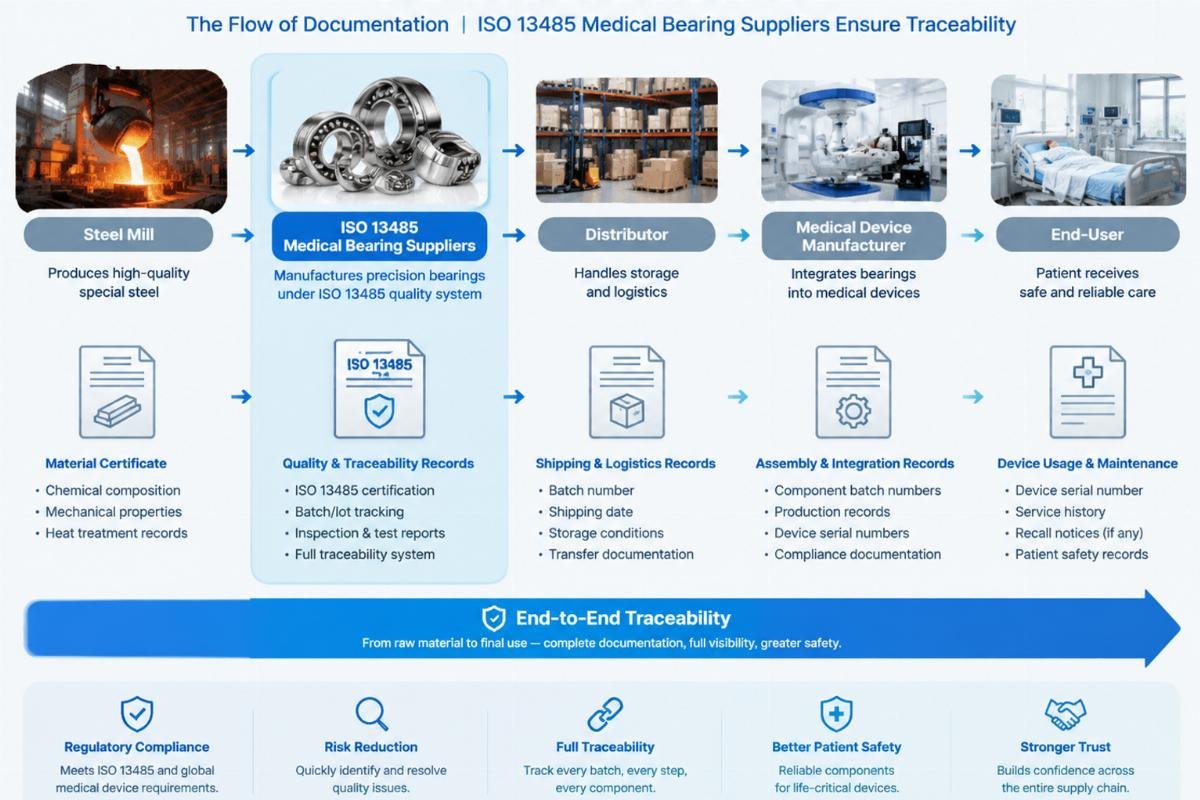
Sourcing compliant components for medical equipment requires more than just a certificate; it demands full chain traceability. To ensure regulatory compliance and patient safety, buyers must verify that their ISO 13485 medical bearing suppliers provide batch-specific material certifications and origin proofs, not just generic brand authorization. Without this documentation, even genuine SKF or FAG bearings can become liability traps during regulatory audits.
I still remember the cold sweat during a surprise inspection at a medical device factory in Jinan. We had equipped a new line of surgical beds with what the supplier swore were genuine NSK deep groove ball bearings. The packaging looked perfect, the logos were crisp, and the price was attractive. But when the auditor asked for the traceability file linking the specific batch number on the bearing ring to the steel mill’s original melt heat number, silence filled the room. The supplier had mixed batches from different sources to fulfill the order quickly. The traceability chain was broken. The entire production line halted, and the cost of non-compliance far exceeded any savings from the cheaper purchase. That incident reshaped my approach to sourcing. Now, when I handle shipments of genuine SKF and FAG medical bearings, the physical product is only half the deliverable. The other half is the paperwork that proves its journey from the manufacturer’s facility to the client’s warehouse.
This experience is not unique. Many procurement managers face similar risks when they prioritize price over verification. The following sections detail how to navigate these challenges, ensuring that every bearing installed in medical equipment meets the strictest regulatory standards.
Why is ISO 13485 critical for medical bearings?
ISO 13485 is not just a quality standard; it is a regulatory requirement for risk management in medical device manufacturing.
While ISO 9001 focuses on customer satisfaction and continuous improvement, ISO 13485 emphasizes regulatory compliance and patient safety. For bearing distributors, this means that the quality management system must cover the entire supply chain, ensuring that products do not introduce contaminants or fail prematurely in critical applications. [NEED_CITE: difference between ISO 9001 and ISO 13485 in medical device context]
In the medical industry, a bearing failure is not merely a mechanical issue; it can lead to device malfunction during surgery or diagnostic errors. Therefore, ISO 13485 medical bearing suppliers must demonstrate that their processes are validated and controlled. This includes strict controls on storage conditions to prevent corrosion, handling procedures to avoid contamination, and documentation practices that allow for full recall if necessary.
Consider a European wind farm operator who switched to a new supplier for maintenance bearings. While the bearings were genuine, the lack of ISO 13485-aligned documentation meant they could not be used in certain regulated environments. Similarly, medical equipment OEMs cannot afford such gaps. If a bearing fails in an MRI machine or a robotic surgical arm, the manufacturer must be able to trace the component back to its source immediately. Without ISO 13485 certification, this traceability is often incomplete or unreliable.

The key takeaway is that ISO 13485 certification ensures that the supplier has a systematic approach to managing risks associated with medical devices. It is not enough to buy from a reputable brand; the distributor must also operate under a quality management system that aligns with medical device regulations. This alignment is what separates a general industrial supplier from a trusted partner in the medical sector.
How to verify a supplier’s ISO 13485 claims?
Demand full chain traceability, not just certificates.
Many suppliers claim to be ISO 13485 certified, but a certificate alone does not guarantee that the specific bearings you receive are compliant. The certificate may cover the supplier’s office operations but exclude their warehousing or logistics processes. To truly verify a supplier’s claims, buyers must look deeper into the documentation provided with each shipment.
A robust verification process involves cross-checking batch numbers on the bearings with the accompanying material certificates. These certificates should link the bearing to the specific steel batch used in its production. [NEED_CITE: importance of material certificates in bearing traceability] Additionally, buyers should request evidence of the supplier’s internal quality checks, such as inspection reports for dimensions and cleanliness.
| Verification Step | Basic Supplier | Certified Partner |
|---|---|---|
| Certificate Scope | General trading only | Includes storage and handling |
| Traceability | Batch number only | Full chain from steel mill to delivery |
| Material Certs | Generic or missing | Specific to each bearing batch |
| Audit Support | Limited documentation | Full access to quality records |
For instance, a US buyer once sourced bearings for a diagnostic imaging device. The supplier provided a valid ISO 13485 certificate, but upon audit, it was revealed that the certificate did not cover the subcontracted cleaning process. This gap led to a failed audit and a costly delay. In contrast, working with verified ISO 13485 medical bearing suppliers ensures that every step, including cleaning and packaging, is documented and compliant.

Buyers should also conduct regular audits or request third-party audit reports. These audits should focus on the supplier’s ability to maintain traceability and handle non-conforming products. A supplier that welcomes such scrutiny is more likely to be a reliable partner. Remember, the goal is not just to find a supplier with a certificate, but one that actively maintains the integrity of the supply chain.
What documents are mandatory for medical bearing procurement?
Batch records, material certs, and origin proofs are non-negotiable.
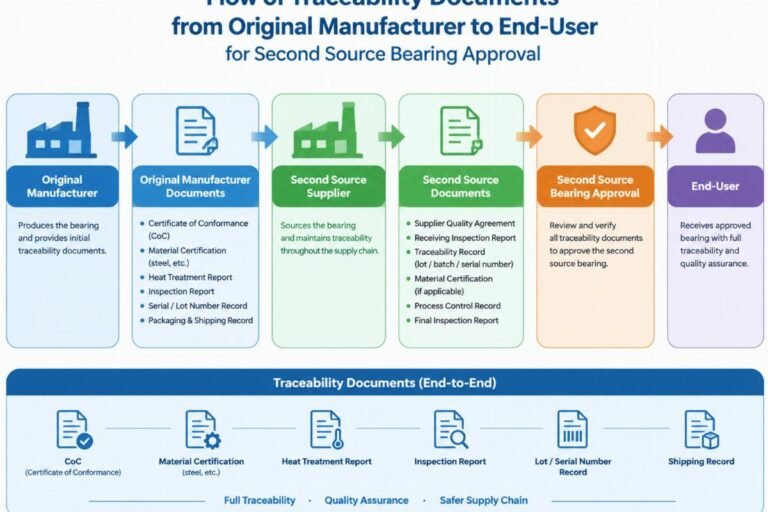
When procuring bearings for medical applications, the documentation package is as critical as the hardware itself. Regulatory bodies like the FDA and EU MDR require manufacturers to maintain detailed records of all components used in their devices. Therefore, ISO 13485 medical bearing suppliers must provide a comprehensive set of documents with every shipment.
The primary document is the Certificate of Conformity (CoC), which states that the bearings meet the specified standards. However, for medical applications, this is often insufficient. Buyers should also demand Material Certificates that specify the chemical composition and mechanical properties of the steel used. These certificates must be linked to the specific batch number of the bearings. [NEED_CITE: FDA requirements for component traceability in medical devices]
Additionally, proof of origin is essential. This document verifies that the bearings were manufactured by the claimed brand, such as SKF or FAG, and not counterfeited. In cases where bearings are repackaged, the supplier must provide documentation showing the original packaging and the repackaging process.
| Document Type | Purpose | Key Content |
|---|---|---|
| Certificate of Conformity | Verifies compliance with specs | Standard references, batch number |
| Material Certificate | Proves material quality | Chemical composition, heat treatment |
| Proof of Origin | Confirms brand authenticity | Manufacturer details, import/export docs |
| Inspection Report | Validates dimensional accuracy | Dimensional checks, cleanliness levels |
A Middle East steel mill once faced a shutdown because they could not provide material certificates for a batch of bearings used in critical cooling pumps. The lack of documentation meant they could not prove the bearings met the required specifications, leading to a complete replacement of the components. In the medical sector, the consequences are even more severe, potentially leading to product recalls.

To avoid such issues, buyers should establish a clear documentation requirement in their purchase orders. This ensures that the supplier understands the importance of providing complete and accurate records. Regularly reviewing these documents can also help identify potential issues before they become major problems.
How to avoid fake bearings in medical supply chains?
Stick to authorized channels with strict vetting.
The market for counterfeit bearings is vast, and medical devices are high-value targets for fraudsters. Fake bearings may look identical to genuine products but often use inferior materials and lack proper heat treatment. This can lead to premature failure and serious safety risks. [NEED_CITE: impact of counterfeit bearings on medical device safety]
To avoid fake bearings, buyers must source from authorized channels. This means purchasing directly from the manufacturer or from distributors who have a direct relationship with the brand. ISO 13485 medical bearing suppliers typically have these relationships and can provide verifiable proof of authorization.
Vetting suppliers involves more than checking their website. Buyers should verify their business license, check for customer reviews, and request references from other medical device manufacturers. Additionally, buyers can use brand-specific verification tools, such as holographic labels or online serial number checks, to confirm authenticity.
| Risk Factor | Counterfeit Source | Authorized Channel |
|---|---|---|
| Material Quality | Unverified, often inferior | Certified, consistent quality |
| Traceability | None or fabricated | Full, verifiable chain |
| Warranty | Non-existent | Valid manufacturer warranty |
| Regulatory Support | None | Full documentation support |
A Latin American hospital group recently discovered that several of their ventilators were using counterfeit bearings. The bearings had failed prematurely, causing device malfunctions. Upon investigation, they found that the supplier had sourced the bearings from an unauthorized intermediary. Switching to a verified ISO 13485 medical bearing suppliers resolved the issue and restored confidence in their supply chain.

Buyers should also be wary of prices that seem too good to be true. Counterfeiters often undercut genuine suppliers to attract buyers. While cost savings are important, they should never come at the expense of quality and compliance. Investing in genuine bearings from authorized sources is a small price to pay for the peace of mind and regulatory security they provide.
Conclusion
Compliance is not optional; it is the foundation of medical device safety.
Sourcing bearings for medical equipment requires a rigorous approach to verification and documentation. By partnering with ISO 13485 medical bearing suppliers who provide full traceability and authentic products, buyers can mitigate regulatory risks and ensure patient safety. Remember, the lowest price often hides unverified supply chains that can lead to massive hidden compliance costs. Prioritize genuine SKF, FAG, and NSK bearings with complete documentation to protect your brand and your patients.
Tagged
Share this article

About the author
author
Editor covering global sourcing, supplier verification, and industrial product knowledge. Content is compiled from manufacturer specifications, industry standards, and hands-on experience with international B2B buyers. Every article is fact-checked before publishing to help procurement professionals make informed decisions.