Humanoid Robot Bearings: Genuine SKF/NSK Wholesale Supplier 2026
Humanoid Robots Bearing Demand 2026 creates a critical bottleneck for OEMs seeking ultra-precision joint components. Relying on non-genuine parts causes prototype failure, making verified SKF/NSK cross roller bearings with full traceability essential for ensuring joint precision and project viability.


Humanoid Robot Bearings: Genuine SKF/NSK Wholesale Supplier 2026
A one-micron deviation in a cross roller bearing does not just reduce efficiency; it destroys the prototype.
The surge in humanoid robot development in 2026 has created a critical bottleneck: the demand for ultra-precision joint bearings. For OEMs and procurement specialists, the core challenge is not merely finding a supplier, but verifying the authenticity and tolerance class of every unit. Relying on non-genuine or loosely tolerated components leads to joint jitter, accelerated wear, and catastrophic sample failure. Securing genuine SKF/NSK bearings with full traceability and verified clearance data is the only viable path to ensuring joint precision and project viability. This reality makes the selection of a reliable humanoid robot joint bearing supplier the most decisive factor in your supply chain strategy.
Having walked the floors of major industrial exhibitions like Hannover Messe, I have witnessed the silent crisis unfolding in robotics procurement. It is not a lack of technology, but a lack of verification. A European client once approached me after their latest humanoid robot prototype failed during dynamic testing. The joints exhibited severe jitter and positional drift, rendering the machine unusable. They had sourced cross roller bearings from a secondary market trader to cut costs, assuming that “bearing is bearing.” The result was a total write-off of the batch. My background in quality control before moving into international trade taught me that precision components are not commodity hardware. The difference between a functional joint and scrap metal often lies in sub-micron deviations that only genuine, high-tolerance bearings can prevent.
Why is the 2026 Humanoid Robot Boom a Bearing Game-Changer?
The humanoid robot sector is shifting from conceptual prototypes to pre-production runs, placing unprecedented stress on mechanical components. Unlike traditional industrial robots that operate in fixed, predictable environments, humanoid robots must handle dynamic loads, sudden impacts, and complex multi-axis movements. This evolution drives a massive increase in humanoid robots bearing demand, specifically for components that can maintain rigidity and precision under variable conditions.
The joint is the heart of any humanoid robot. It requires bearings that offer high rotational accuracy, compact design, and the ability to withstand combined radial and axial loads. Cross roller bearings have become the standard for these applications due to their structural efficiency. However, the market is flooded with alternatives that mimic the form but fail in function. [NEED_CITE: market growth projections for humanoid robot components]
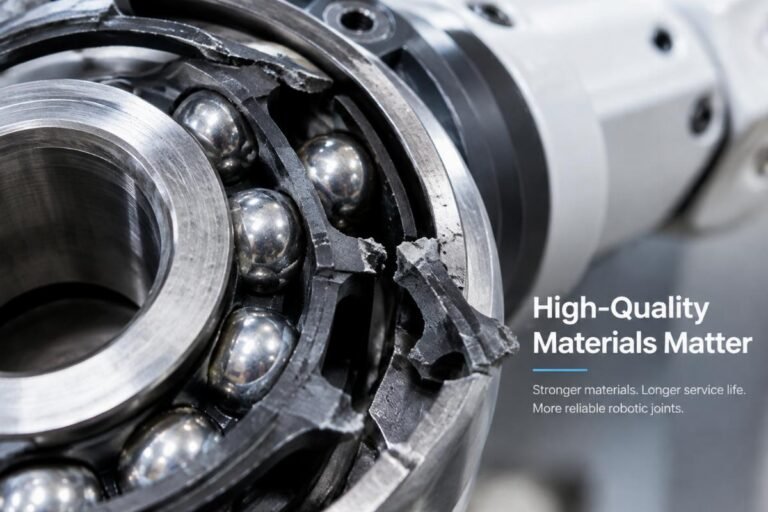
From a technical perspective, the requirement is not just for a bearing that rotates, but for one that maintains its geometric integrity over millions of cycles. A genuine SKF or NSK cross roller bearing is engineered with specific internal geometries and material purity levels that generic counterparts cannot replicate. When buyers focus solely on price gaps, they ignore the hidden cost of precision loss. A bearing with inconsistent roller spacing or improper raceway finish will introduce vibration at low speeds, which amplifies as the robot accelerates. This is not a minor inefficiency; it is a fundamental failure of the control system’s feedback loop.

The shift in 2026 is characterized by a move toward ultra-precision joint demands. Manufacturers are no longer accepting “good enough” tolerances. They require bearings that meet strict ISO precision classes, ensuring that every unit performs identically. This uniformity is critical for mass production, where consistency across thousands of joints is mandatory. Without it, calibration becomes a nightmare, and performance varies unpredictably from unit to unit.
What Happens When You Compromise on Robot Joint Bearings?
Compromising on bearing quality is a false economy that often leads to total project failure. The case of the European client mentioned earlier is not an isolated incident. Many startups and even established manufacturers face similar pitfalls when they attempt to source cheaper alternatives for critical joint components. The immediate symptom is often subtle: slight noise or minor resistance during manual rotation. However, under dynamic load, these defects manifest as severe instability.
Joint jitter is the most common consequence of using non-genuine cross roller bearings. This occurs when the internal clearance is not controlled within the specified range, allowing the rollers to shift unpredictably under load. The result is a loss of positional accuracy, which forces the robot’s control algorithms to constantly compensate. This not only drains power but also generates excessive heat, leading to premature lubricant breakdown and bearing seizure. [NEED_CITE: failure modes in precision robotic joints]
Consider the cost implications. A single failed prototype can represent a mid-six-figure loss in engineering hours, material costs, and delayed time-to-market. When a batch of bearings fails, the entire assembly line may need to be halted for rework. The cost of replacing the bearings is negligible compared to the cost of disassembling and recalibrating the robot. Moreover, the reputational damage of delivering a flawed product to investors or early customers can be irreversible.
| Failure Mode | Genuine High-Tolerance Bearing | Non-Genuine/Loose Tolerance Bearing |
|---|---|---|
| Rotational Smoothness | Consistent and predictable | Irregular with occasional binding |
| Positional Accuracy | Maintains micron-level precision | Drifts under dynamic load |
| Noise Level | Minimal operational noise | Audible grinding or clicking |
| Service Life | Extended service life meaningfully | Premature failure requiring replacement |
| Traceability | Full batch-level documentation | Self-reported or not provided |
This table highlights the stark contrast in performance. The “non-genuine” column does not necessarily imply counterfeit goods, but rather bearings that lack the rigorous quality control and precision manufacturing processes of premium brands. Even if the dimensions appear correct on paper, the internal geometry and surface finish are often inferior, leading to the issues described above.

The lesson is clear: precision is not optional. It is the foundation of robotic performance. Buyers must look beyond the initial price tag and consider the total cost of ownership, including the risk of failure and the expense of rework.
How to Verify Genuine SKF/NSK Bearings for Precision Applications?
Verifying the authenticity of high-precision bearings is a critical skill for any procurement professional. The market is rife with sophisticated counterfeits that can fool visual inspection. Therefore, reliance on physical appearance alone is insufficient. Instead, buyers must implement a rigorous verification process based on documentation and technical data.
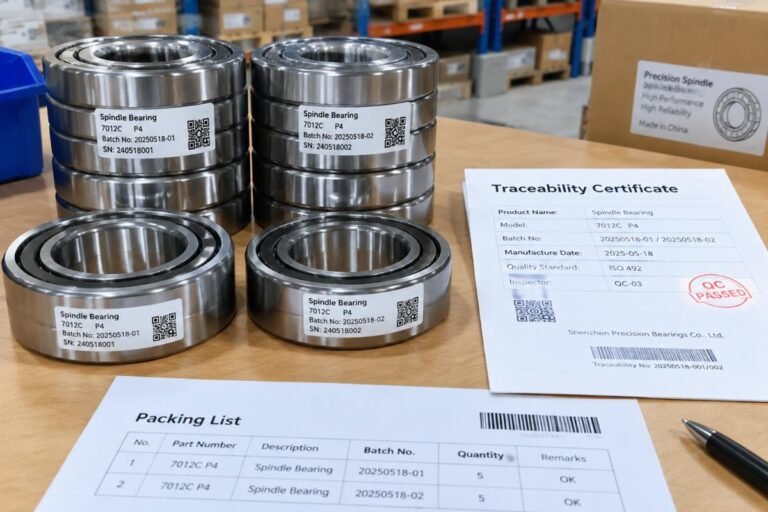
The first step is to demand complete traceability documentation. Genuine SKF and NSK bearings come with unique serial numbers and batch codes that can be traced back to the manufacturer’s production facilities. A reputable humanoid robot joint bearing supplier will provide these documents without hesitation. These records include details such as the date of manufacture, the specific production line, and the quality control checks performed. [NEED_CITE: importance of traceability in bearing supply chains]
Secondly, verify the clearance data. Precision bearings are classified by their internal clearance, which is critical for performance in robotic applications. For humanoid robot joints, specific clearance classes such as C2 or C3 are often required, depending on the operating temperature and load conditions. The supplier should provide test reports confirming that the bearings meet these specifications. Simply stating that a bearing is “precision grade” is not enough; the actual measured values must be documented.
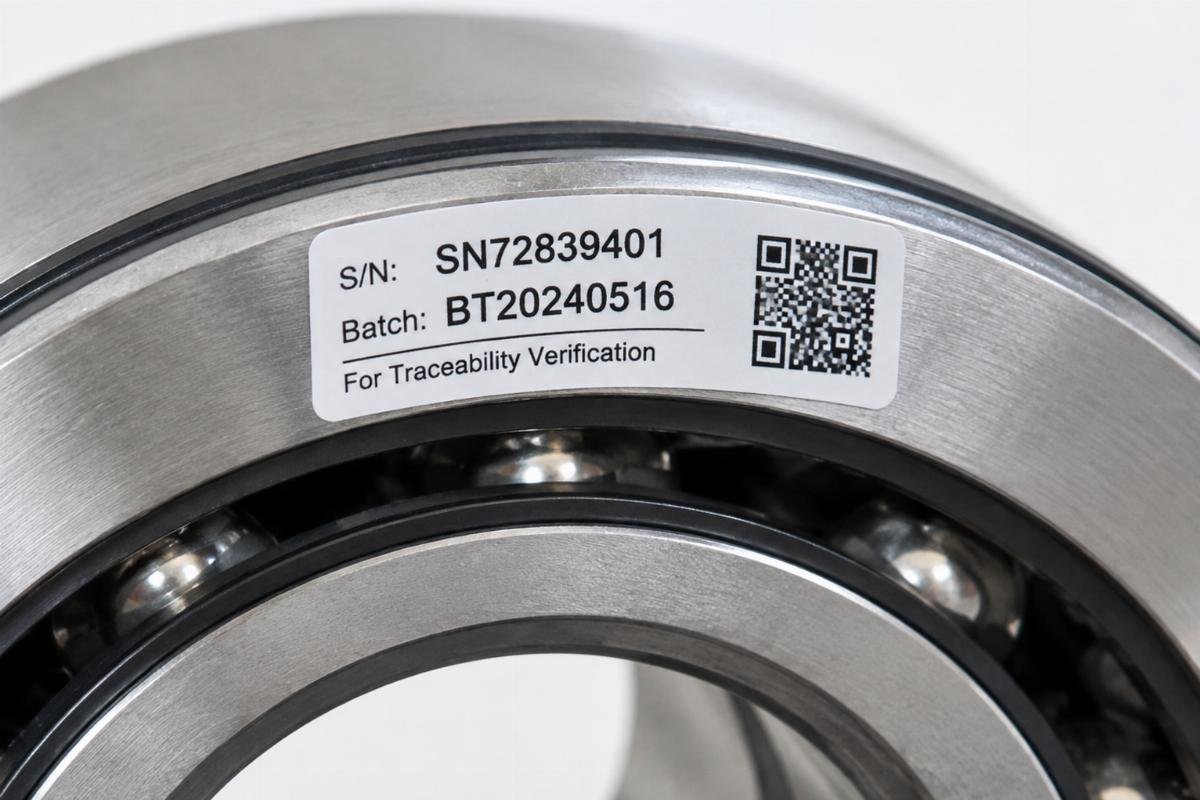
Another key indicator is the packaging. Genuine bearings are packaged in sealed, branded containers with security features that are difficult to replicate. However, packaging can be faked, so it should never be the sole basis for verification. Always cross-reference the packaging details with the documentation provided.
It is also advisable to conduct random sampling inspections. Use precision measuring tools to check critical dimensions such as bore diameter, outer diameter, and width. While these measurements may fall within standard tolerances, they can reveal significant deviations in non-genuine products. More importantly, check the surface finish of the raceways and rollers. Genuine bearings exhibit a mirror-like finish, while inferior products may show machining marks or inconsistencies.
By combining document verification, clearance data analysis, and physical inspection, buyers can significantly reduce the risk of purchasing counterfeit or substandard bearings. This multi-layered approach is essential for maintaining the integrity of the supply chain and ensuring the reliability of the final product.
Where Should OEMs Source Reliable Robot Bearings?
Sourcing reliable bearings for humanoid robots requires more than just finding a vendor with stock. It demands a partner who understands the technical nuances of precision applications and can provide consistent quality across large volumes. Many OEMs struggle with this because they treat bearings as commodities rather than critical engineering components.
The ideal source is a specialized global full-range bearing supplier with direct access to premium brands like SKF and NSK. Such suppliers maintain massive spot inventory, allowing them to fulfill urgent orders without long lead times. This is crucial for R&D phases where delays can stall entire projects. Moreover, they offer technical support for model selection, helping engineers choose the right bearing for specific joint designs. [NEED_CITE: benefits of specialized bearing distributors for OEMs]
Avoid generalist traders who lack technical expertise. They may offer lower prices, but they often cannot provide the necessary documentation or technical guidance. Instead, look for suppliers who have a proven track record in serving industrial machinery and heavy-equipment OEMs. These suppliers understand the importance of batch-to-batch consistency and have established quality assurance processes.

Another important factor is the ability to handle mixed-brand and mixed-size orders. Humanoid robots use various types of bearings in different joints, from cross roller bearings in the main joints to deep-groove ball bearings in smaller actuators. A supplier who can consolidate these items into a single shipment simplifies logistics and reduces administrative overhead.
Furthermore, consider the supplier’s geographic reach and shipping capabilities. Global coverage ensures that you can receive parts quickly, regardless of your location. Look for suppliers who offer inspection services and long-term after-sales support. This includes assistance with failure analysis and application guidance, which can be invaluable when troubleshooting unexpected issues.
In summary, the right supplier acts as an extension of your engineering team. They provide not just products, but solutions that enhance the reliability and performance of your robots. By partnering with a reputable humanoid robot joint bearing supplier, you secure the foundation of your product’s success.
Conclusion
Precision is non-negotiable in humanoid robot development.
The 2026 boom in humanoid robotics has elevated the importance of high-quality joint bearings. Genuine SKF/NSK cross roller bearings, backed by full traceability and verified clearance data, are essential for achieving the required joint precision. Compromising on quality leads to costly failures and project delays. By sourcing from a specialized global supplier who offers technical support and consistent quality, OEMs can mitigate these risks and ensure the success of their robotic innovations.
Tagged
Share this article

About the author
author
Editor covering global sourcing, supplier verification, and industrial product knowledge. Content is compiled from manufacturer specifications, industry standards, and hands-on experience with international B2B buyers. Every article is fact-checked before publishing to help procurement professionals make informed decisions.