Dental Handpiece Bearings: Size & Speed Guide – Wholesale Supplier
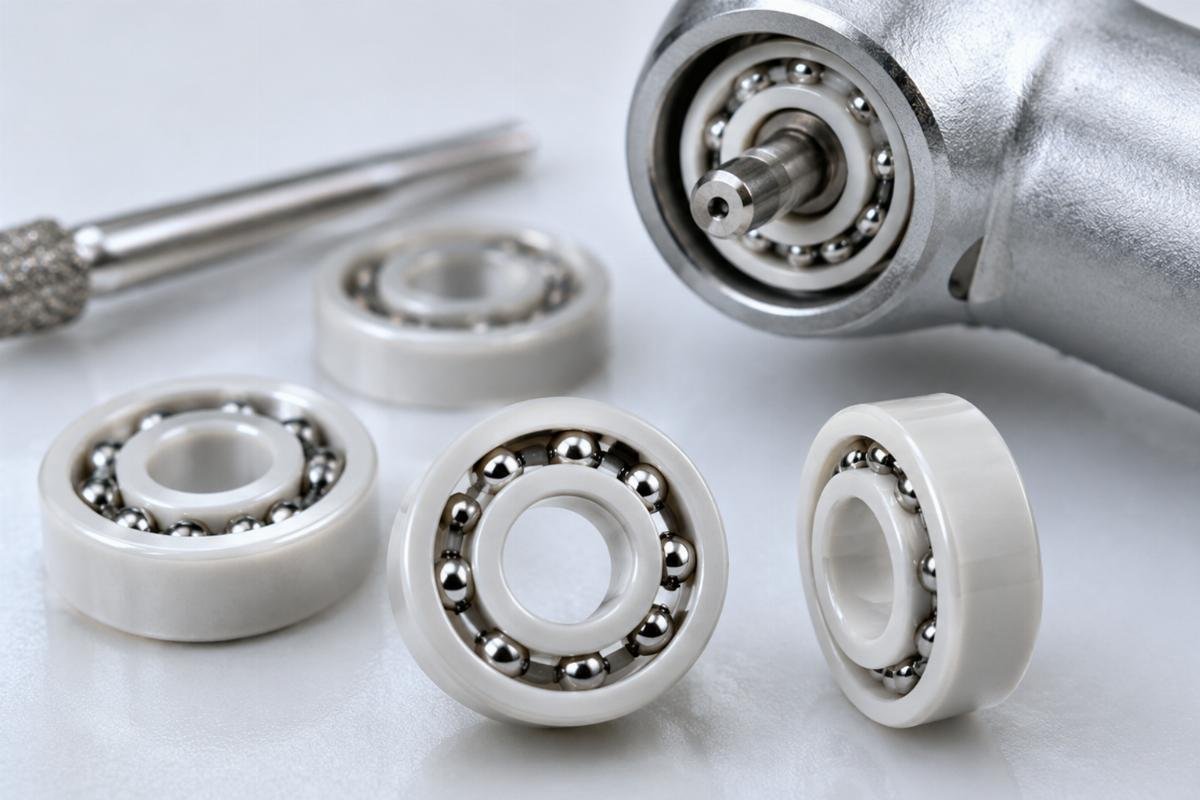
Selecting dental handpiece bearings requires matching micron-level tolerances and material limits to specific RPM thresholds to prevent thermal seizure. Ceramic variants handle 400,000 RPM without expansion issues that plague steel, while precise verification of clearance codes reduces warranty claims for distributors and OEMs.

Dental Handpiece Bearings: Size & Speed Guide – Wholesale Supplier
A two-micron clearance error does not just cause noise; it guarantees catastrophic rotor lock-up at 400,000 RPM.
Selecting the correct dental handpiece bearings requires matching micron-level dimensional tolerances and material thermal limits to specific rotational speed thresholds to prevent heat-induced seizure. High-speed applications demand ceramic variants to manage thermal expansion, while low-speed units rely on precise steel geometry for torque transmission. Failure to align these specifications results in immediate warranty claims and equipment downtime.
The distinction between a functional handpiece and a returned unit often lies in invisible microscopic gaps. In Riyadh, I once inspected a batch of high-speed turbines that had seized during autoclave cycles. The outer rings showed distinct blue discoloration from friction heat, yet the initial inspection reports claimed they met standard size requirements. The issue was not the nominal diameter but the internal radial clearance. At rest, the bearings spun freely. Under load and heat, the steel expanded into the non-existent gap, locking the rotor. This is not a manufacturing defect in the traditional sense but a selection error. Understanding the interplay between size, speed, and material is critical for any distributor or OEM sourcing dental handpiece bearings.
What Are the Critical Size Tolerances for Handpiece Bearings?
Exact micron-level clearances dictate rotor stability and heat generation, making standard industrial tolerances insufficient for dental applications.
Dental handpieces operate in a unique environment where miniaturization meets extreme rotational velocity. The bearings used are typically miniature deep-groove ball bearings, often with bore diameters as small as 1 mm to 3 mm. At this scale, a deviation of a few microns represents a significant percentage of the total clearance. [NEED_CITE: ISO standards for miniature bearing tolerances and radial internal clearance classes]
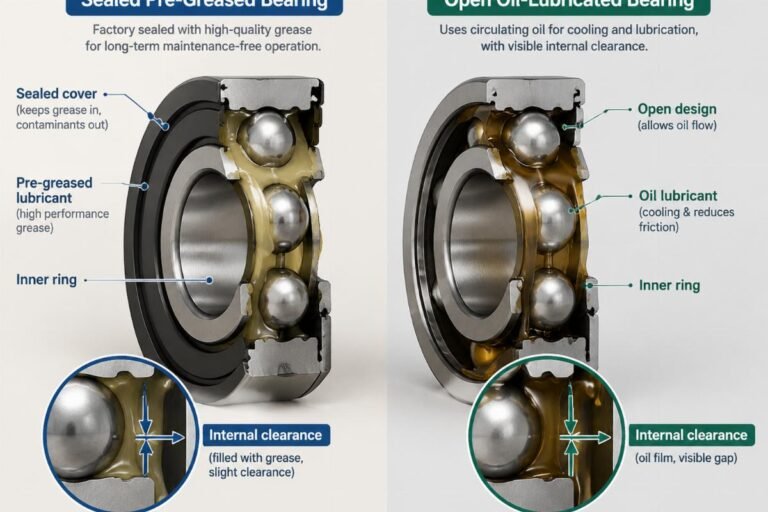
When sourcing dental handpiece bearings, buyers must look beyond the basic boundary dimensions (inner diameter, outer diameter, width). The critical parameter is the radial internal clearance, usually specified as C2, CN, or C3. For high-speed turbines, a C3 clearance is often preferred to accommodate thermal expansion. However, if the housing bore is machined to a loose tolerance, even a C3 bearing may shift, causing vibration. Conversely, a tight housing with a CN clearance bearing will seize as temperatures rise.
| Parameter | Standard Industrial Miniature | High-Speed Dental Specification | Impact of Deviation |
|---|---|---|---|
| Radial Clearance | CN (Normal) | C3 (Increased) | Seizure due to thermal expansion |
| Precision Class | P0 (Standard) | P5 or P4 (High Precision) | Vibration and premature fatigue |
| Surface Finish | Standard Grind | Super Finish | Increased friction and heat |
| Cage Material | Steel or Nylon | Phenolic or Special Polymer | Cage disintegration at high RPM |
A European OEM once reported inconsistent noise levels in their new turbine line. The investigation revealed that their supplier had substituted standard P0 grade bearings for the specified P5 grade. While the dimensions were identical, the waviness of the raceways in the P0 bearings created harmonic vibrations at 300,000 RPM. This vibration accelerated wear, leading to early failure. [NEED_CITE: Relationship between bearing precision class and vibration levels in high-speed spindles]
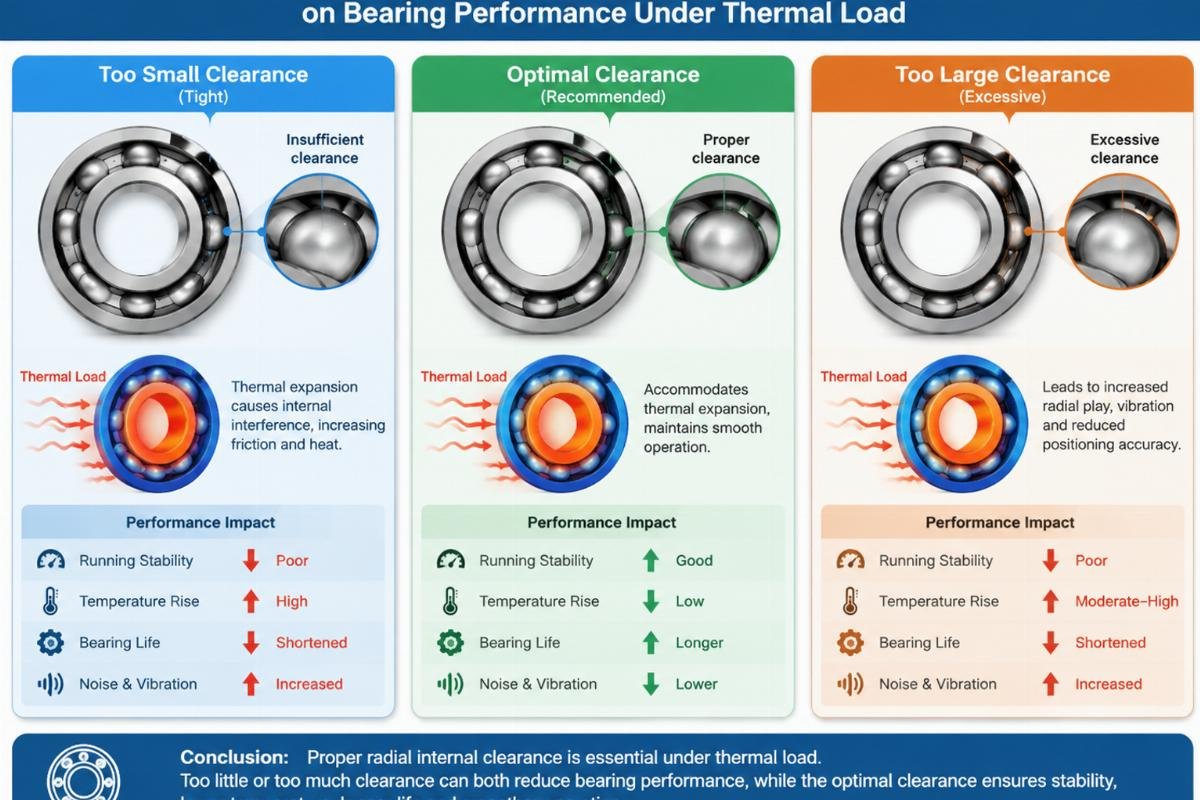
For distributors, this means that cross-referencing part numbers requires more than matching the SKU. It demands verifying the precision class and clearance code. A bearing labeled with the same numerical code but lacking the specific suffix for high-precision grinding will fail in a dental context. This is why technical datasheets must be reviewed against the original equipment manufacturer’s specifications before any bulk order is placed.
How Do Speed Ratings Differ Between Steel and Ceramic?
Ceramic bearings handle 400,000 RPM without the thermal expansion issues that plague chrome steel, making them essential for modern high-speed turbines.
The core argument for using ceramic dental handpiece bearings is not just hardness but thermal stability. Chrome steel (AISI 52100) expands significantly when heated. In a high-speed handpiece, friction generates heat rapidly. As the steel balls and races expand, the internal clearance decreases. If the speed is high enough, the clearance disappears entirely, leading to metal-on-metal contact, rapid temperature spike, and seizure.
Silicon nitride (Si3N4) ceramic balls, however, have a much lower coefficient of thermal expansion and are lighter than steel. This reduces centrifugal force on the outer ring at high speeds, allowing the bearing to maintain its geometry and clearance. [NEED_CITE: Comparative thermal expansion coefficients of AISI 52100 steel vs Silicon Nitride ceramic]
| Feature | Chrome Steel (52100) | Silicon Nitride Ceramic (Si3N4) | Operational Consequence |
|---|---|---|---|
| Density | High | Low | Reduced centrifugal load on outer ring |
| Thermal Expansion | High | Low | Maintains clearance at high RPM |
| Hardness | High | Very High | Better resistance to abrasive wear |
| Electrical Conductivity | Conductive | Insulating | Prevents electrical erosion in some motors |
A distributor in Southeast Asia faced a wave of returns from clinics using a new brand of “high-speed” handpieces. The units worked fine at idle but failed within weeks of clinical use. The root cause was the use of standard steel bearings in a turbine designed for 400,000 RPM. The steel balls could not dissipate the heat fast enough, and the expansion locked the rotor. Switching to hybrid bearings with ceramic balls resolved the issue immediately. [NEED_CITE: Failure analysis of high-speed spindle bearings due to thermal seizure]
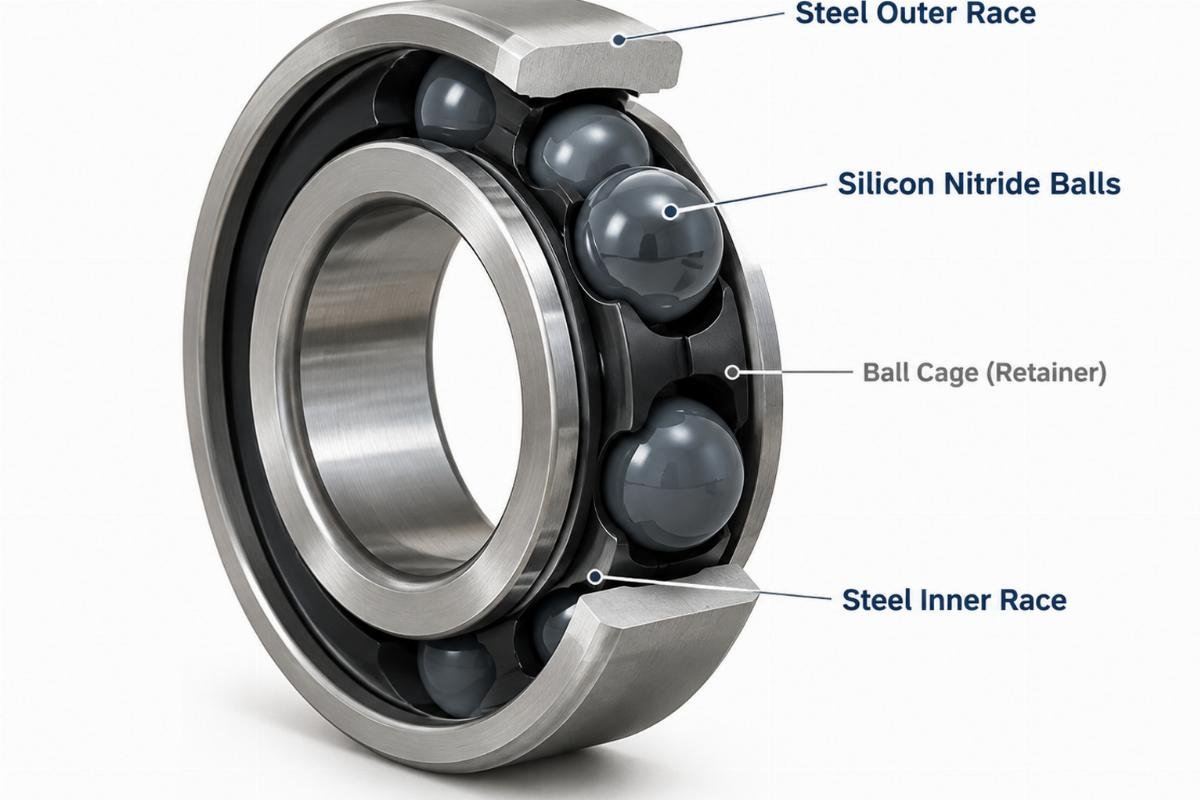
It is a counter-intuitive reality that cheaper steel bearings often cost more in the long run due to warranty claims. For MRO distributors, stocking hybrid or full ceramic dental handpiece bearings for high-speed applications is a risk mitigation strategy. While the upfront cost is higher, the reduction in return rates and the ability to market “high-RPM reliability” adds value for end-users.
Which Bearing Type Fits High-Speed vs Low-Speed Handpieces?
Matching the bearing contact angle and load rating to the handpiece type prevents premature fatigue and ensures optimal torque transmission.
Not all dental handpieces spin at hundreds of thousands of revolutions per minute. Low-speed contra-angle handpieces operate at much lower RPMs but require higher torque for cutting and grinding. Using a high-speed turbine bearing in a low-speed application can lead to poor load distribution and early failure. Conversely, using a heavy-duty low-speed bearing in a high-speed turbine will generate excessive heat due to increased friction.
The primary distinction lies in the bearing design: deep-groove ball bearings for high-speed/low-load applications and angular contact ball bearings for higher-load scenarios. [NEED_CITE: Load rating differences between deep-groove and angular contact ball bearings]
| Handpiece Type | Typical Speed Range | Recommended Bearing Type | Key Requirement |
|---|---|---|---|
| High-Speed Turbine | 300,000 – 400,000 RPM | Deep-Groove Ball (Hybrid Ceramic) | Minimal friction, high precision |
| Low-Speed Contra-Angle | 1,000 – 40,000 RPM | Angular Contact or Deep-Groove (Steel) | Higher load capacity, torque transmission |
| Surgical Air Motor | Up to 200,000 RPM | Hybrid Ceramic Deep-Groove | Balance of speed and sterilization resistance |
A case from a Middle East supply chain highlighted this mismatch. A clinic ordered replacement bearings for their surgical air motors, assuming they were the same as their standard high-speed turbines. The installed bearings failed quickly under the lateral loads generated by surgical burs. The correct specification required bearings with a higher dynamic load rating, which the standard turbine bearings lacked. [NEED_CITE: Application guidelines for bearing selection in dental surgical motors]
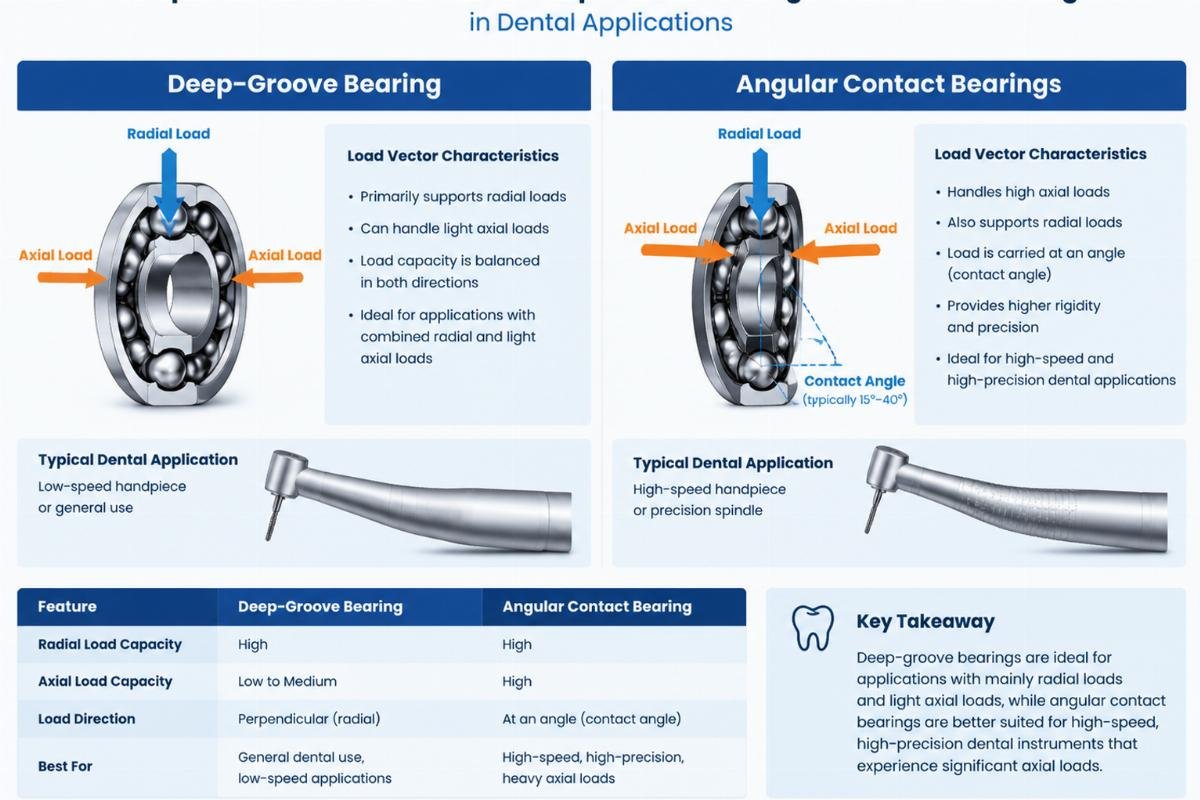
For wholesalers, maintaining a clear separation between high-speed and low-speed inventory is crucial. Mislabeling or cross-supplying these components leads to technical support burdens and damaged reputation. Understanding the mechanical demands of each handpiece type allows for more accurate consultation with OEMs and repair centers.
How to Verify Quality When Sourcing Globally?
Traceability documentation and ABEC grading verification prevent batch-to-batch failures and ensure consistent performance across global supply chains.
Sourcing dental handpiece bearings from global markets introduces the risk of inconsistent quality. A batch that meets specifications today may fail tomorrow if the supplier changes sub-tier manufacturers without notice. Verification goes beyond checking the box; it requires validating the supply chain’s integrity.
Key verification steps include requesting material certificates for the steel or ceramic components, confirming the precision class through independent testing reports, and ensuring the supplier has a robust traceability system. [NEED_CITE: Importance of material traceability in precision bearing manufacturing]
- Request Material Certificates: Ensure the steel meets AISI 52100 standards or the ceramic meets medical-grade specifications.
- Verify Precision Class: Ask for test reports confirming P4 or P5 precision levels, not just self-declared labels.
- Check Traceability: Each batch should have a unique lot number linked to production data.
- Sample Testing: Before large orders, test samples in actual handpiece units under load.
A US buyer once received a container of bearings that looked perfect but failed prematurely. Investigation showed the supplier had sourced raw materials from a non-certified mill to cut costs. The impurities in the steel led to early spalling. Had the buyer requested full traceability documentation, this risk could have been identified before shipment. [NEED_CITE: Case studies on bearing failure due to material impurities]
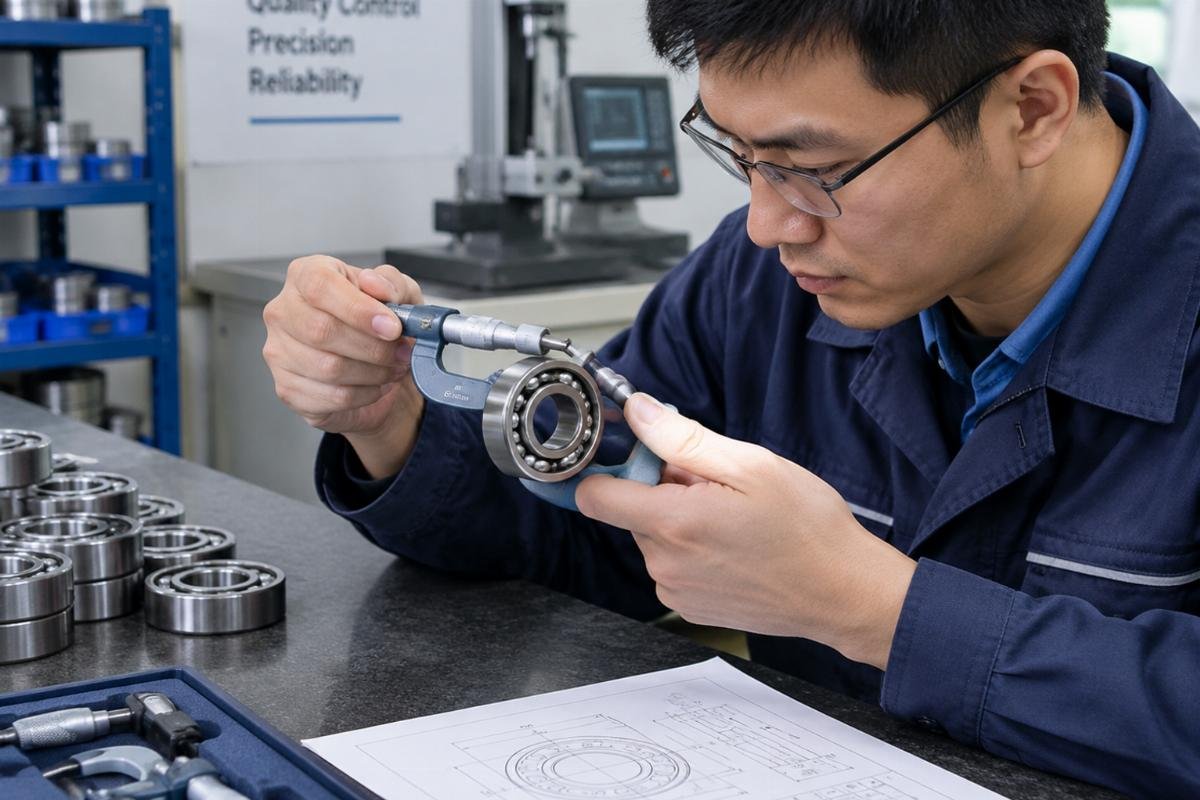
For distributors, establishing a relationship with a supplier who offers genuine stock from premium brands like SKF, NSK, or FAG, alongside reliable domestic lines, provides a safety net. These suppliers often have the infrastructure to provide the necessary documentation and technical support to verify quality. This level of transparency is essential for building trust with end-users who demand reliability.
Conclusion
Precision in micron-level tolerances and material selection defines the reliability of dental handpiece bearings.
Selecting the right component involves balancing speed, load, and thermal constraints. Ceramic variants offer superior performance at high RPMs, while precise steel geometries remain vital for low-speed torque. Verifying quality through traceability and proper grading ensures consistent outcomes. Distributors and OEMs who prioritize these technical specifics reduce warranty claims and enhance their market reputation.
Tagged
Share this article

About the author
author
Editor covering global sourcing, supplier verification, and industrial product knowledge. Content is compiled from manufacturer specifications, industry standards, and hands-on experience with international B2B buyers. Every article is fact-checked before publishing to help procurement professionals make informed decisions.